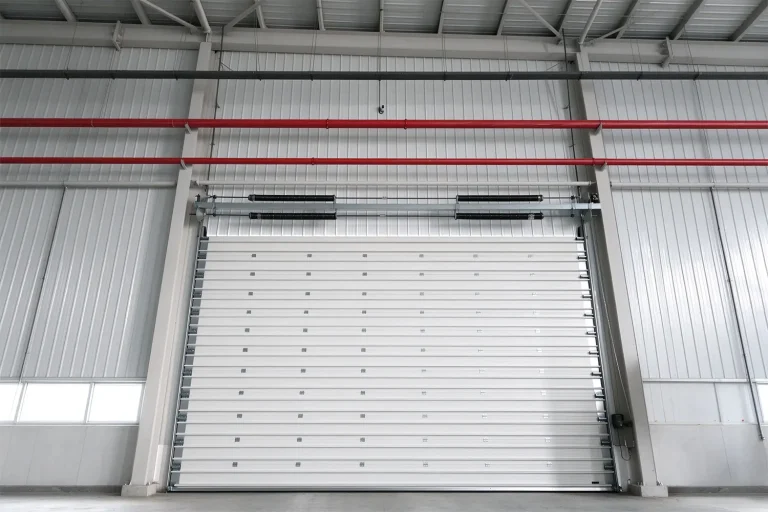
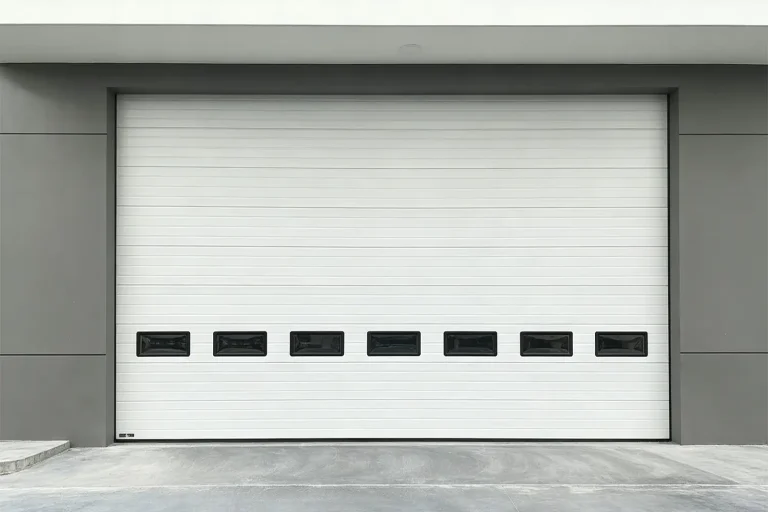
The ROI of Insulated Sectional Overhead Doors in Climate-Controlled Warehouses
In the highly competitive landscape of cold chain logistics, pharmaceutical storage, and food-grade distribution, maintaining precise temperature control is the absolute priority. However, the energy required to power massive commercial HVAC and refrigeration systems represents one of the largest operational expenditures for any facility. The loading dock and exterior access points are the most vulnerable areas of the building envelope. Every time a door opens, or if a closed door lacks sufficient thermal resistance, expensive conditioned air escapes, and ambient exterior air infiltrates. For CFOs and facility managers evaluating infrastructure upgrades, investing in premium insulated sectional overhead doors is not merely a structural necessity; it is a strategic financial decision. This analysis breaks down the true Return on Investment (ROI) of deploying highly engineered insulated doors in climate-controlled warehouses.
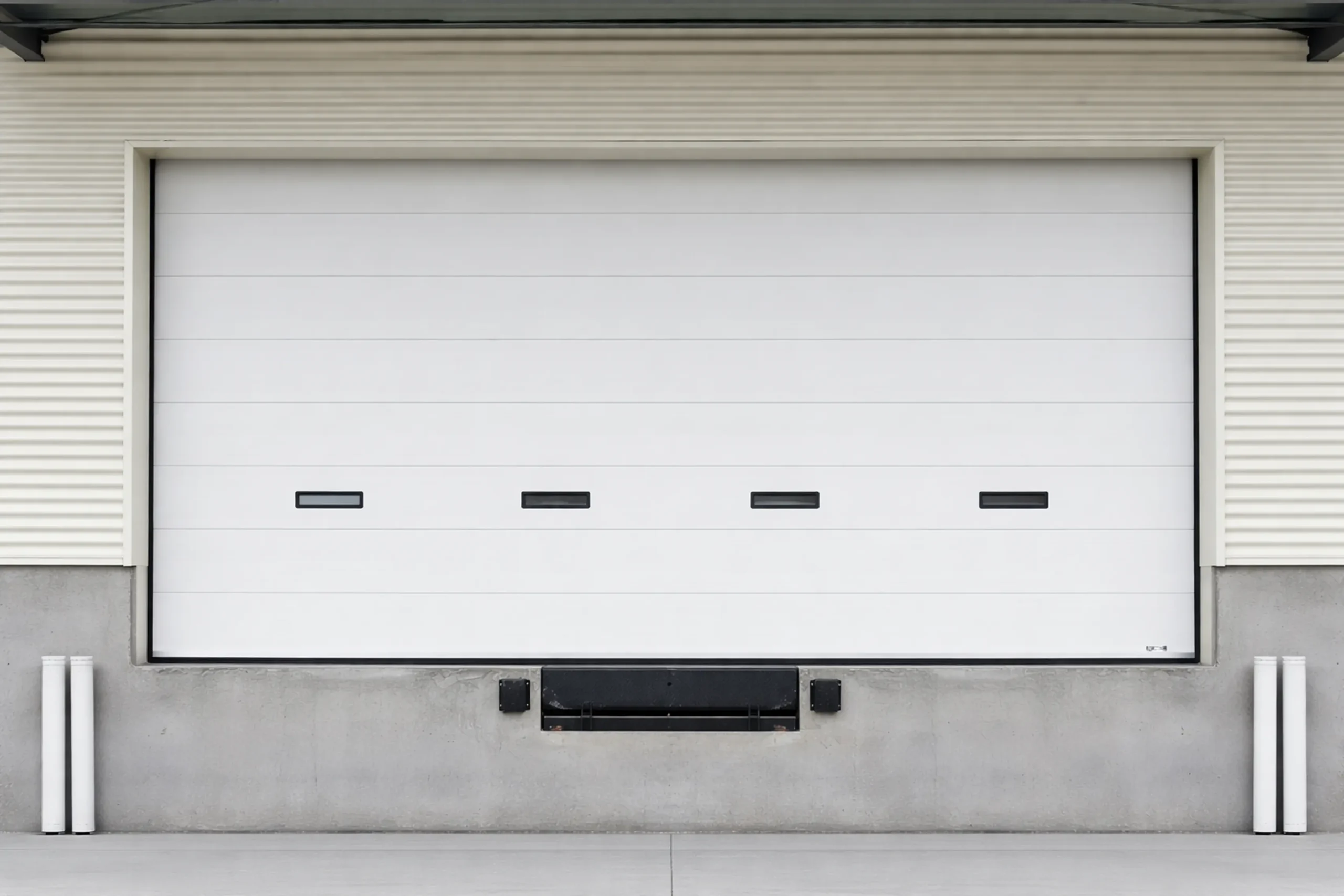
Calculating the Cost of Energy Loss
To understand the ROI, one must first quantify the financial bleed caused by inferior doors. Standard commercial doors, often uninsulated or filled with low-grade expanded polystyrene (EPS), offer minimal resistance to heat transfer. In a deep-freeze facility operating at -20°C (-4°F) located in a warm climate, the temperature differential between the interior and exterior can exceed 50°C. Thermodynamics dictates that heat will aggressively seek to equalize this differential.
If a facility utilizes doors with poor R-values, the refrigeration compressors must run almost continuously to compensate for the thermal bleed. This continuous operation not only results in exorbitant monthly electricity bills but also accelerates the mechanical wear and tear on the HVAC infrastructure, leading to premature equipment replacement costs. Upgrading to high-density insulated sectional doors directly attacks this baseline operational expense.
The Thermal Envelope: High-Density PU Foam and R-Values
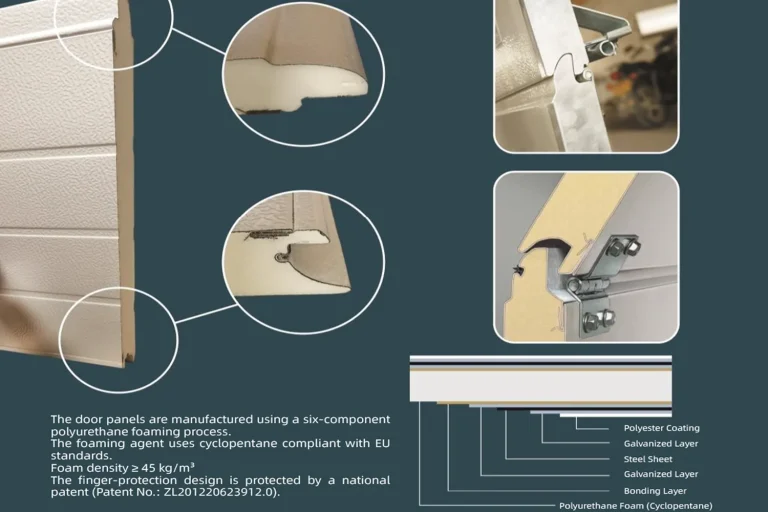
The core driver of a sectional door’s ROI is its insulation material and density. The industry benchmark for maximum thermal resistance is Polyurethane (PU) foam. Unlike EPS, which is cut and glued into the panel, PU foam is injected as a liquid. It expands to fill 100% of the panel cavity, chemically bonding to the steel or aluminum skins to create a rigid, monolithic structure with zero internal air gaps.
Premium manufacturers inject CFC-free cyclopentane PU foam at a high density of 45-48 kg/m³, achieving a closed-cell rate exceeding 95%. When facility managers specify panel thicknesses of 50mm or 80mm with this high-density core, the door can achieve an exceptional thermal transmittance coefficient (K≤0.8W/m³.K) and an R-value up to 17. By effectively locking the conditioned air inside the facility, the HVAC system’s duty cycle is drastically reduced. The energy savings generated from this thermal barrier often pay for the cost of the door upgrade within the first 18 to 24 months of operation.
Eliminating Thermal Bridging: The Hidden ROI Killer
A high R-value core is mathematically useless if the door’s structural design permits thermal bridging. Thermal bridging occurs when the exterior metal skin of the door physically touches the interior metal skin. Metal is a highly efficient conductor of heat. In a cold storage environment, the exterior heat will bypass the PU insulation entirely, traveling through the metal frame to the interior of the facility.
This bridging not only causes energy loss but also lowers the interior surface temperature of the door below the dew point, resulting in severe condensation and ice buildup. Ice destroys perimeter seals and creates hazardous slip conditions for forklift operators. To maximize ROI, buyers must specify doors featuring a thermal break. Advanced engineering, such as a patented broken-bridge anti-pinch design, physically separates the inner and outer steel layers with a non-conductive barrier. This completely severs the thermal bridge, eliminating condensation, protecting the EPDM rubber seals, and preserving the integrity of the thermal envelope.
Operational ROI: High-Cycle Hardware and Uptime
While energy savings form the foundation of the ROI calculation, maintenance costs and operational uptime are equally critical. A highly insulated door that is constantly broken provides zero value. Climate-controlled logistics hubs operate at high frequencies; therefore, the mechanical hardware must match the quality of the insulation.
Standard commercial doors utilize torsion springs rated for 10,000 cycles and thin 1.5mm tracks. In a busy facility, these components will fail rapidly. Every hour a dock door is stuck open, the facility hemorrhages energy and logistics throughput halts. To ensure a positive ROI, the insulated panels must be paired with heavy-duty hardware. Specifying shot-peened 55CrSi or 60Si2Mn torsion springs rated for 30,000+ cycles, along with 1.8mm galvanized bolt-on tracks, guarantees that the door will perform reliably for years. The reduction in emergency repair bills and the elimination of logistics downtime significantly accelerate the payback period of the initial capital expenditure.
Protecting High-Value Inventory
Finally, the most catastrophic cost a climate-controlled facility can face is inventory spoilage. In pharmaceutical cold chains or food-grade storage, a temperature fluctuation of just a few degrees can result in the loss of millions of dollars of product and severe regulatory fines. Premium insulated sectional doors, equipped with airtight perimeter seals and high-density PU cores, provide the ultimate insurance policy against temperature excursions. By viewing industrial doors not as a construction expense, but as a critical component of the facility’s energy management and risk mitigation strategy, CFOs and facility managers can secure a compounding Return on Investment that benefits the bottom line for decades.
CONTACT ABX
Your Direct Source for Industrial Access Solutions
We offer 24/7 support. Feel free to leave us a message — we'll reply within 24 hours.