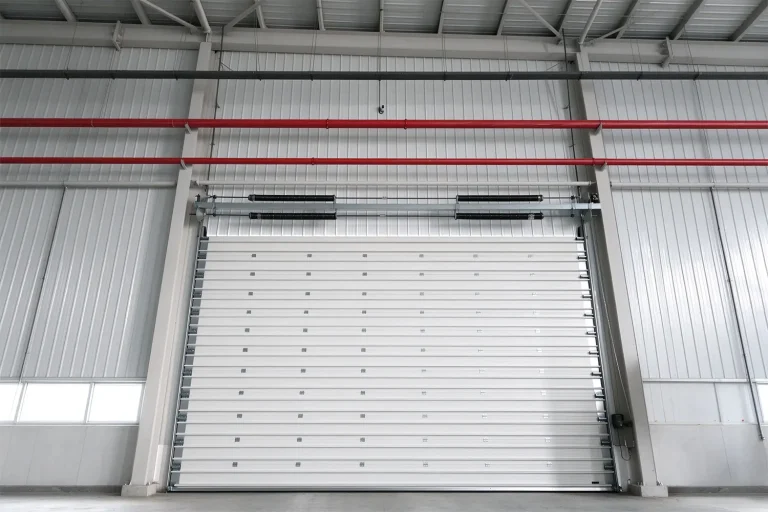
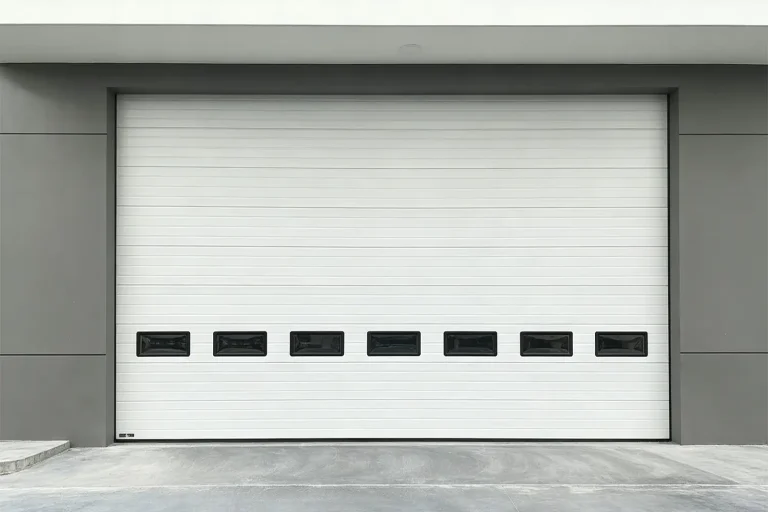
Preventing Thermal Bridging in Cold Storage Doors: The Broken-Bridge Design
In the highly specialized world of cold chain logistics, pharmaceutical storage, and deep-freeze food processing, temperature control is a zero-tolerance discipline. Facilities operating at -20°C (-4°F) or lower expend massive amounts of electrical energy to maintain these extreme environments. While facility engineers meticulously specify high R-value insulation for the walls and roof, the loading dock doors frequently remain the Achilles’ heel of the thermal envelope. The most insidious and destructive culprit behind energy loss and equipment failure in these environments is not a lack of insulation, but a phenomenon known as thermal bridging. Understanding and preventing thermal bridging through advanced engineering, specifically the broken-bridge design, is critical for the survival of any deep-freeze facility.
The Physics of Thermal Bridging
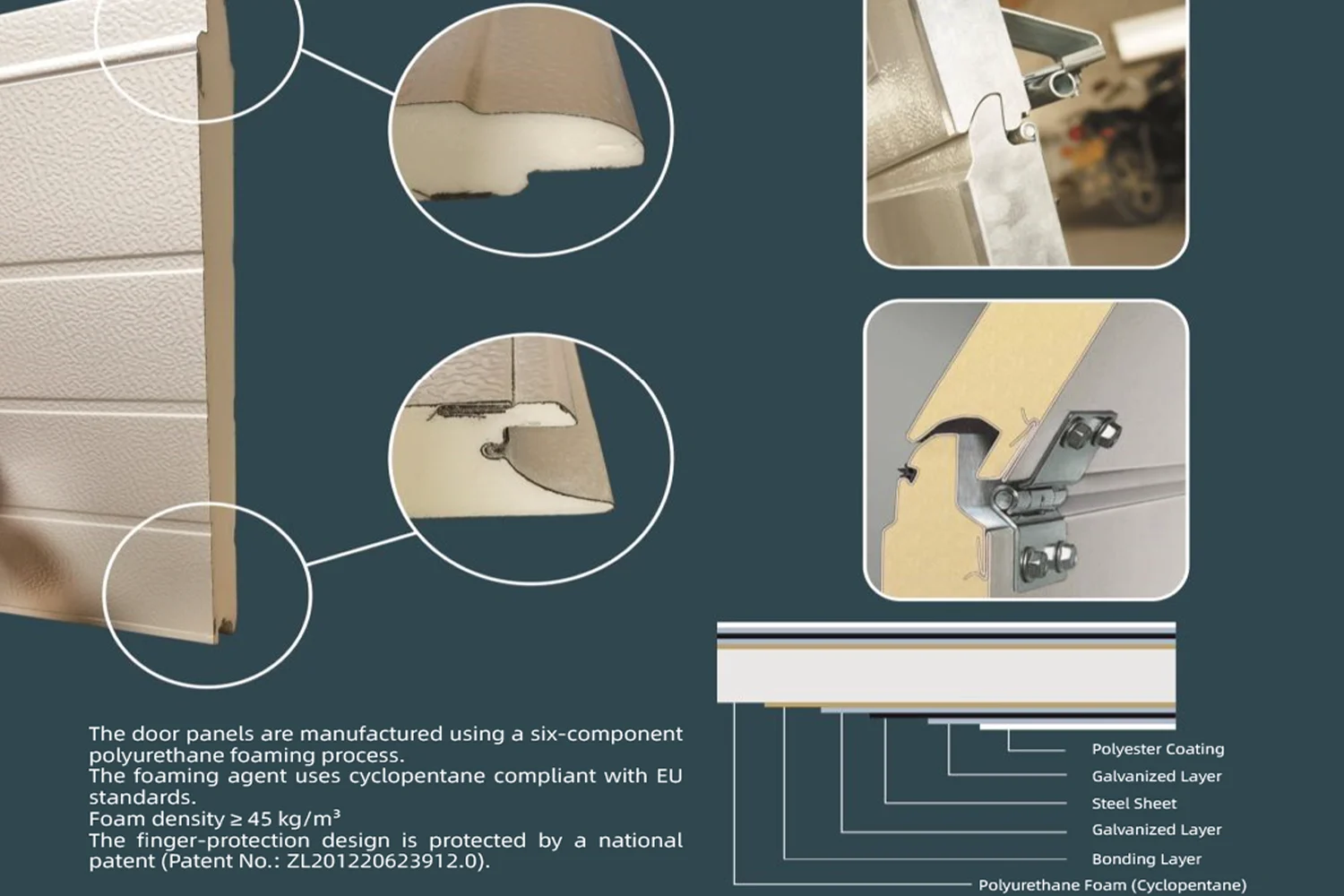
To comprehend the threat, one must look at the thermodynamics of a standard insulated commercial door. Most sectional doors are constructed as a ‘sandwich’—an interior metal skin and an exterior metal skin filled with an insulating core like EPS or PU foam. However, at the edges of the panels, where the sections interlock (the tongue and groove), the interior and exterior metal skins often fold over and touch each other to create a structural seal.
Metal is an exceptional conductor of heat. When the exterior metal skin is exposed to a hot, humid summer day (e.g., 35°C / 95°F) and the interior skin is exposed to a deep-freeze environment (-20°C / -4°F), the heat bypasses the insulation entirely. It travels directly through the continuous metal connection from the outside to the inside. This conductive path is the ‘thermal bridge.’
The Catastrophic Consequences in Cold Storage
Thermal bridging is not merely an invisible drain on HVAC efficiency; it manifests in highly destructive physical ways within a cold storage warehouse.
1. Condensation and Ice Accumulation
Because heat is rapidly drawn out of the interior metal skin through the thermal bridge, the surface temperature of the door’s interior drops below the dew point of the ambient air inside the loading bay. Any moisture present in the air instantly condenses on the metal surface. In a -20°C environment, this condensation immediately freezes. Over a matter of hours, thick layers of ice build up along the panel joints, the track systems, and the floor threshold.
2. Destruction of Perimeter Seals and Hardware
Ice is incredibly destructive to mechanical systems. When a door is frozen shut, the industrial motor must exert massive, unintended torque to rip the door open, placing severe strain on the cables and torsion springs. More critically, the jagged ice tears the EPDM rubber weather seals located between the panels and at the bottom edge. Once the seals are shredded, massive air infiltration occurs, destroying the facility’s climate control and forcing the refrigeration compressors to run continuously.
3. Severe Safety Hazards
As ice builds up on the door and eventually melts during loading cycles, it creates puddles on the concrete dock floor that quickly refreeze. This creates a lethal slip-and-fall hazard for warehouse personnel and causes 10,000-pound forklifts to lose traction, leading to catastrophic workplace accidents.
The Engineering Solution: Broken-Bridge Technology
Adding thicker insulation to a door with a thermal bridge is mathematically useless; the heat will simply continue to travel through the metal bypass. The only scientific way to stop this energy transfer is to physically sever the conductive path. This is achieved through ‘broken-bridge’ (or thermal break) engineering.
Premium industrial door manufacturers, such as ABX Doors, utilize a patented broken-bridge design (Patent: ZL201220623912.0). In this advanced manufacturing process, the interior and exterior steel skins of the door panel never touch. They are physically separated by a high-strength, non-conductive polymer or rubber barrier integrated directly into the panel’s joint profile. This thermal break acts as an impenetrable roadblock for heat transfer.
Synergizing Thermal Breaks with High-Density PU Foam
Once the thermal bridge is severed, the core insulation can perform at its maximum theoretical efficiency. For deep-freeze applications, the broken-bridge design must be paired with extreme-density insulation. ABX injects CFC-free cyclopentane Polyurethane (PU) foam at a density of 45-48 kg/m³. With a closed-cell rate exceeding 95%, this core prevents any internal moisture absorption.
When an 80mm thick panel is equipped with both high-density PU foam and a patented broken-bridge design, the door achieves an extraordinary thermal transmittance coefficient (K≤0.8W/m³.K) and an R-value up to 17. The interior surface of the door remains close to the ambient room temperature, completely eliminating condensation and ice buildup.
Securing the Cold Chain Envelope
For cold storage operators, specifying the right door is a critical risk management decision. By demanding broken-bridge technology and high-density PU insulation, facility engineers can permanently eliminate ice buildup, protect their EPDM seals, and drastically reduce the electrical load on their refrigeration systems. Investing in true thermal break engineering is the ultimate safeguard for maintaining temperature integrity and maximizing ROI in the demanding world of cold chain logistics.
CONTACT ABX
Your Direct Source for Industrial Access Solutions
We offer 24/7 support. Feel free to leave us a message — we'll reply within 24 hours.