Loading Dock Leveler Types Explained | Hydraulic vs Mechanical | ABX Manufacturer
Dock bottlenecks and equipment failures account for a massive percentage of warehouse downtime. When facility managers or general contractors specify the wrong dock leveler, the results are immediate: bumpy forklift transitions, damaged cargo, and frequent maintenance halts. This guide breaks down loading dock leveler types, providing a data-driven framework to help you select equipment that minimizes downtime and eliminates unnecessary repair costs.
Why Proper Warehouse Dock Leveler Selection Matters
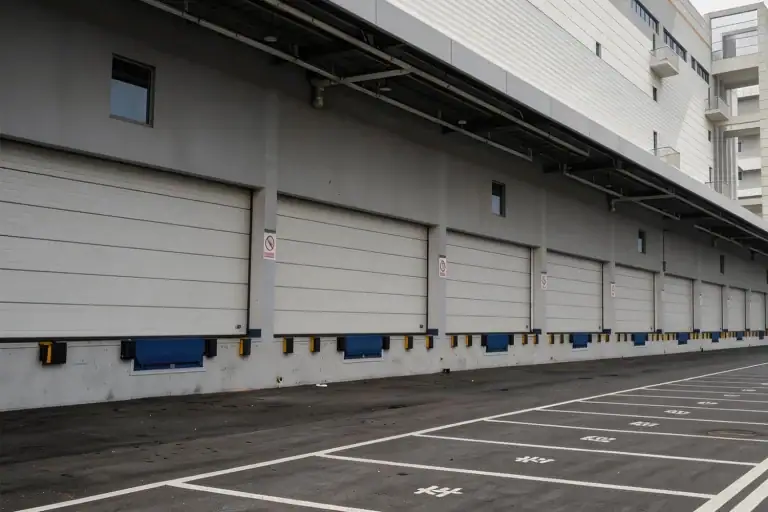
A dock leveler bridges the exact height difference between the warehouse floor and the trailer bed. Specifying the correct unit depends entirely on your facility’s daily throughput volume and maximum forklift weight. Failing to match the leveler’s capacity to your operational demands leads to structural fatigue and premature failure.
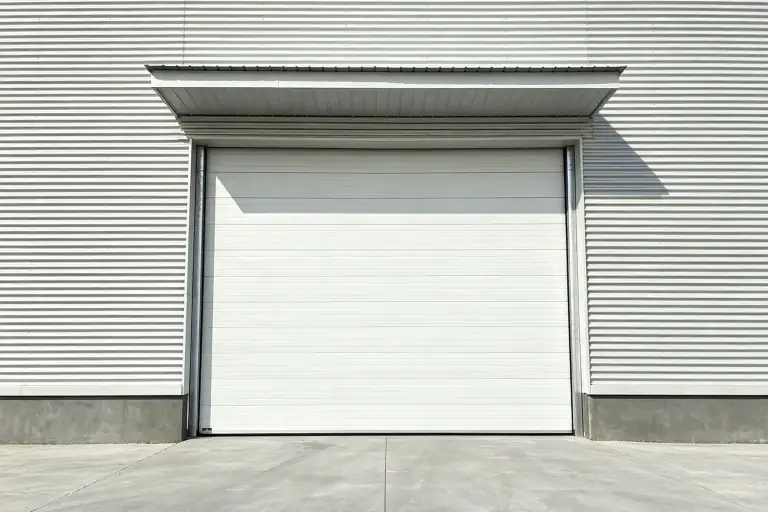
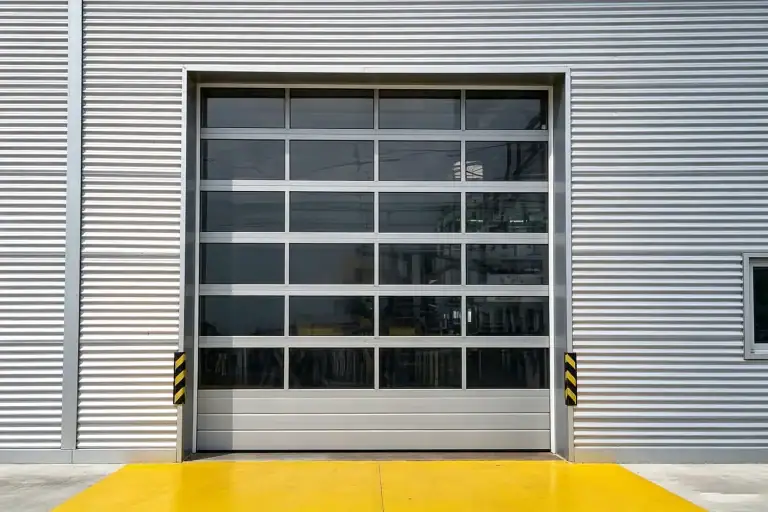
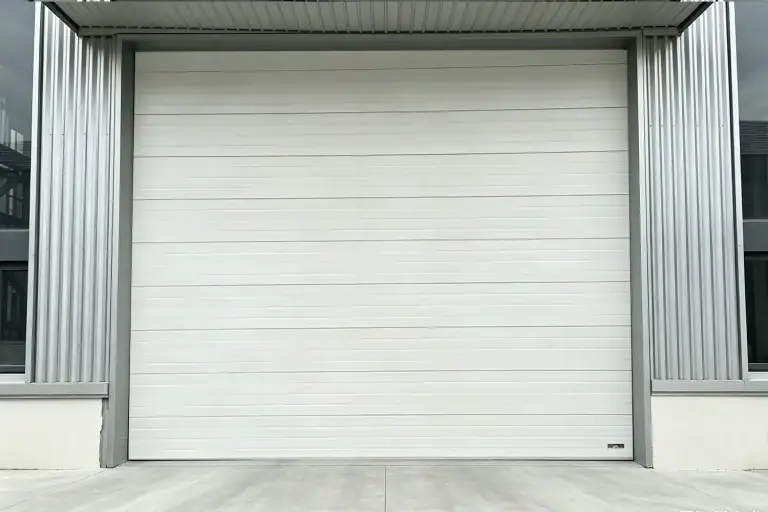
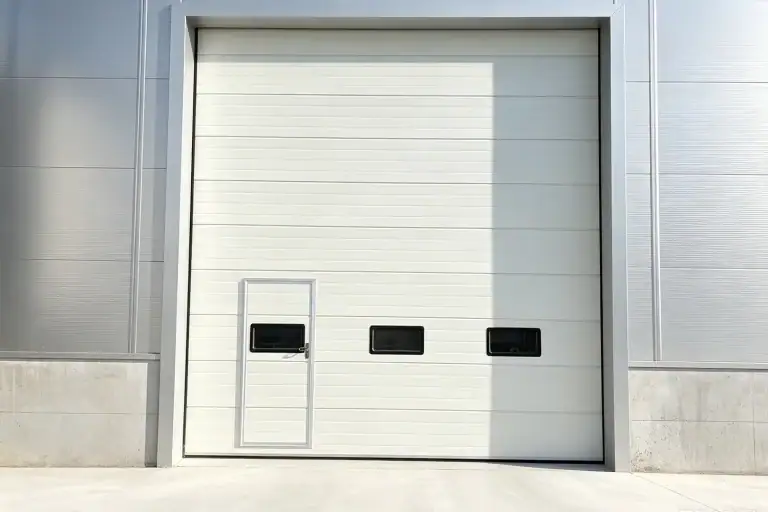
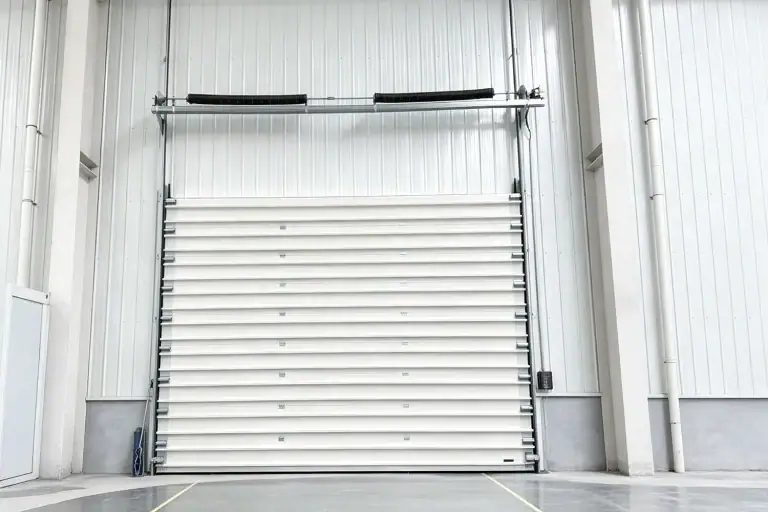
Furthermore, an underperforming leveler compromises the efficiency of your complete docking systems. When paired with premium industrial sectional doors—featuring high-density PU insulation (≥45-48 kg/m³) and Category 12 typhoon resistance (700N/m² wind load)—a reliable leveler ensures the entire bay operates seamlessly without thermal leaks. As a 15-year source factory, ABX Doors guarantees a strict 15-20 day lead time for these complete, high-performance docking setups.
Loading Dock Leveler Types Explained
Mechanical Dock Levelers: Cost-Effective for Low-Traffic
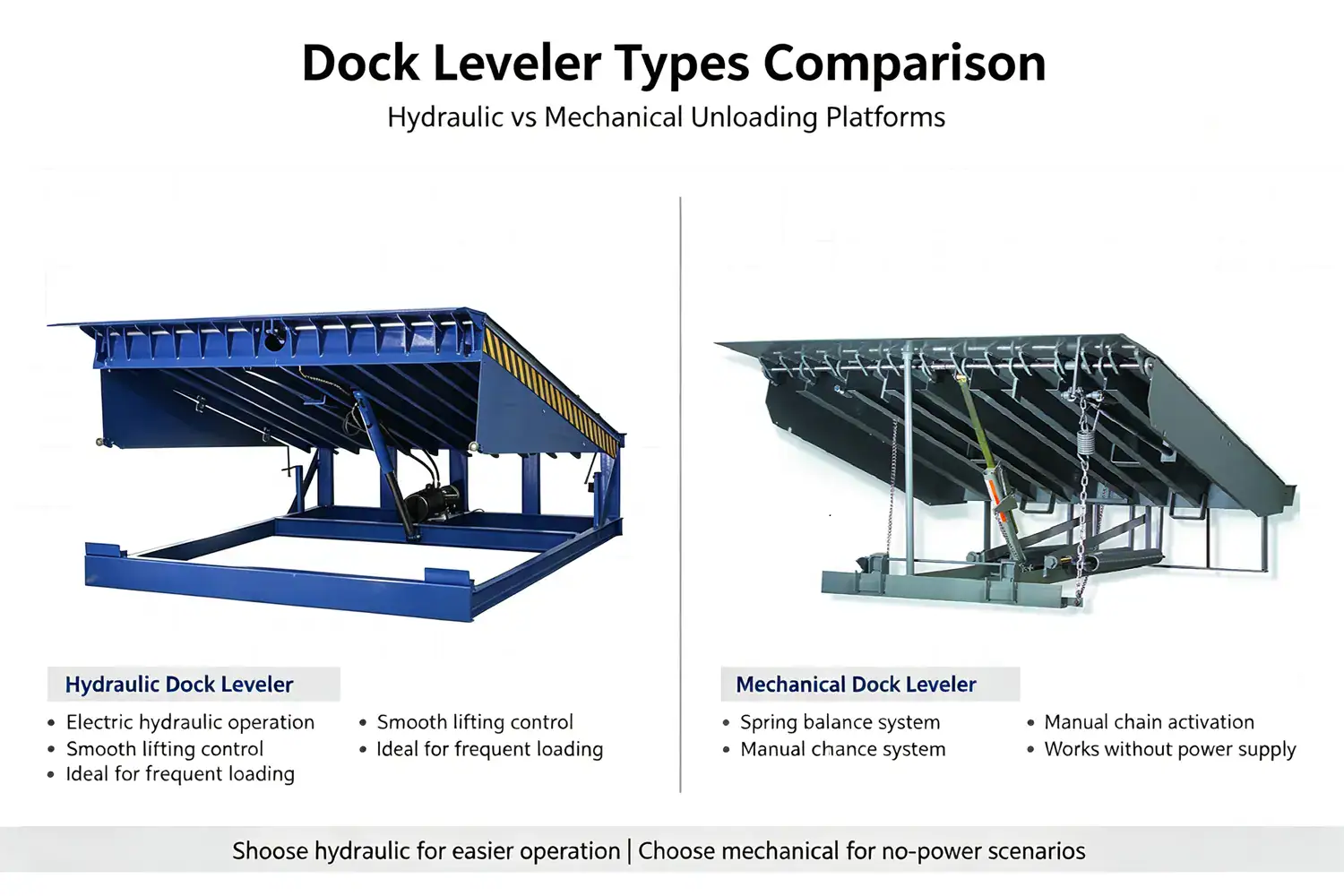
Mechanical levelers operate using a spring-biased lifting mechanism. The operator pulls a release chain, allowing the heavy-duty springs to force the deck upward and extend the lip onto the truck bed.
- Pros: They require a lower initial capital investment and need no electrical wiring. This makes them suitable for remote facilities or loading bays with very low daily traffic.
- Cons: They generate high long-term maintenance costs. The springs undergo constant tension and require frequent adjustments or replacements. Manual operation also increases the physical strain on warehouse personnel and slows down the docking process.
Hydraulic Dock Levelers: Heavy-Duty Performance
Hydraulic levelers utilize electrically powered hydraulic cylinders to raise the deck and deploy the lip via a simple push-button interface. This design completely removes physical labor from the docking process.
For modern logistics hubs processing hundreds of cycles daily, hydraulic systems are the strict industry standard. They offer superior structural stability, handle heavier forklift loads, and drastically reduce the wear-and-tear associated with mechanical spring systems.
Hydraulic vs Mechanical Dock Leveler: Which is Right for You?
To maximize your facility’s ROI, evaluate your leveler choice against these core operational metrics:
- Initial Investment: Mechanical units cost less upfront. Hydraulic units require a higher initial budget for the equipment and electrical installation.
- Maintenance Costs: Mechanical levelers demand regular spring tension adjustments and lubrication. Hydraulic levelers operate with fewer moving parts, significantly lowering annual maintenance expenses.
- Lifespan & Durability: Hydraulic systems absorb heavy impacts better and outlast mechanical counterparts in high-throughput environments.
- Operational Efficiency: Push-button hydraulic operation saves minutes per loading cycle compared to manual chain-pulling, directly increasing daily throughput.
For any B2B facility handling more than a few trucks per day, the hydraulic dock leveler delivers a substantially higher ROI by eliminating manual labor and minimizing maintenance downtime.
Engineering Standards: What Makes a Dock Leveler Last?
When evaluating loading dock leveler types, the spec sheet reveals the true lifespan of the equipment. The ABX H-1000 series hydraulic dock leveler is engineered specifically to eliminate the most common points of failure in logistics hubs.
Smooth Forklift Transitions with Advanced Lip Design
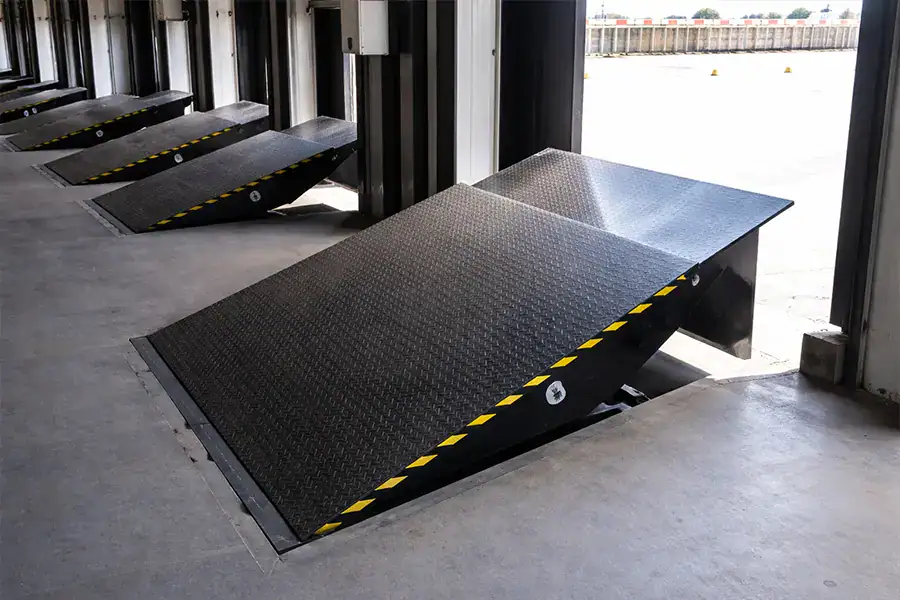
Standard leveler lips often create a sharp incline, causing “dock shock” that damages forklift tires and fragile cargo. ABX engineers solve this with a double 5-degree arched lip (14/15mm high-strength anti-slip checkered steel plate). This specific geometry significantly increases the overlapping area with the truck bed, ensuring a perfectly smooth, bump-free transition for heavy forklifts.
Structural Integrity and Leak Prevention
Oil leaks and structural warping are the leading causes of dock leveler maintenance cost. The H-1000 series prevents these issues through two critical design upgrades:
- Single-Cylinder Inverted Design: Unlike traditional upright cylinders that collect debris, our inverted hydraulic cylinder effectively prevents dust accumulation. This protects the oil seals from premature wear, completely eliminating the risk of oil leaks.
- Closed Tubular Hinge: Instead of standard open hinges, we utilize a closed tubular hinge design. This ensures even stress distribution across the 8mm thick deck base plate, preventing deformation even under maximum load capacities.


Safety and International Compliance
For global general contractors, compliance is non-negotiable. Every ABX dock leveler is manufactured under ISO9001 standards and carries strict CE and EAC certifications, ensuring full compliance with international machinery and safety directives.
Integrate Your Dock Levelers with Smart Sectional Doors
A high-performance leveler is only one component of an efficient loading bay. Modern logistics centers integrate these platforms with premium industrial sectional doors. By connecting the dock leveler to our IoT-enabled central control boxes, facility managers can achieve seamless DCS/PLC system integration, ensuring the door and leveler operate in perfect synchronization to minimize thermal loss and maximize throughput.
Ready to Upgrade Your Logistics Hub?
Stop losing money on inefficient docking bays, damaged cargo, and hydraulic oil leaks. As a 15-year source factory, ABX Doors provides complete, CE-certified docking solutions engineered for zero downtime.
Download CAD Drawings & Tech SpecsRequest a Custom Project Quote
Frequently Asked Questions (FAQs)
What is the main difference between hydraulic and mechanical dock levelers?
Mechanical levelers use a spring-biased system requiring manual operation, which has lower initial costs but higher long-term maintenance. Hydraulic levelers use push-button electric cylinders, offering heavy-duty performance, zero manual labor, and significantly lower maintenance costs, making them ideal for high-traffic logistics hubs.
How does ABX prevent hydraulic dock leveler oil leaks?
ABX utilizes a proprietary single-cylinder inverted design. Unlike traditional upright cylinders that collect dust and debris, the inverted design prevents accumulation. This protects the oil seals from premature wear and completely eliminates the risk of oil leaks.
What size and capacity dock leveler do I need for a logistics hub?
The required capacity depends on your maximum forklift weight plus the heaviest load it will carry. For modern logistics hubs, we highly recommend hydraulic levelers equipped with closed tubular hinges and double 5-degree arched lips to handle heavy loads without structural deformation or “dock shock.”
CONTACT ABX
Your Direct Source for Industrial Access Solutions
We offer 24/7 support. Feel free to leave us a message — we'll reply within 24 hours.