Sectional Overhead Door Details: Understanding Torsion Springs and Cycle Ratings
In the realm of industrial architecture and facility management, the sectional overhead door is often viewed simply as a moving wall. However, from an engineering perspective, it is a highly tensioned, dynamic machine. The most critical component of this machine—the true muscle that dictates its operational lifespan and safety—is the torsion spring system. When procurement managers and architects specify sectional overhead door details, misunderstanding torsion springs and cycle ratings is the leading cause of premature equipment failure and catastrophic loading dock downtime. This technical guide delves into the metallurgy, mathematics, and maintenance of industrial torsion springs.

The Mechanics of Torsion Springs
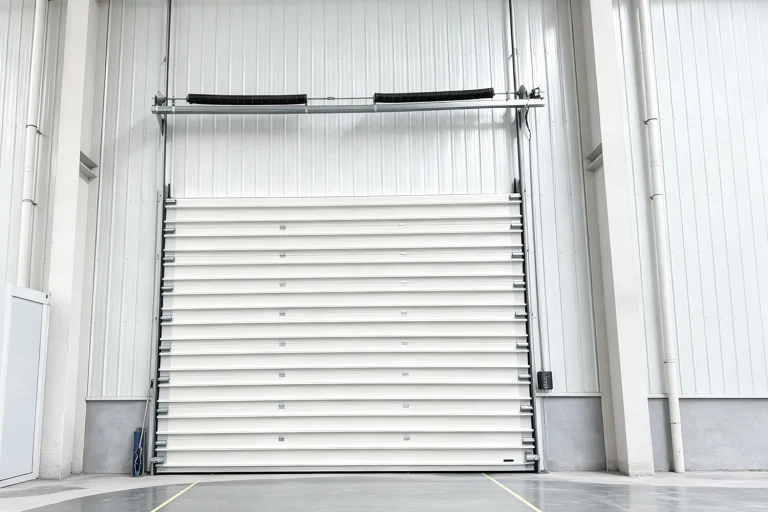
Unlike extension springs that stretch along the horizontal tracks, torsion springs are mounted on a solid steel shaft directly above the door opening. As the heavy steel or aluminum door is lowered, cables attached to the bottom corners of the door spin the shaft, tightly winding the springs. This winding action stores immense kinetic energy. When the motor (or manual operator) opens the door, the springs unwind, releasing that stored energy to counterbalance the dead weight of the door panels. A properly calibrated torsion spring system renders a 1,000-pound industrial door light enough to be lifted by hand.
Decoding Cycle Ratings: What Does It Actually Mean?
In the commercial door industry, a ‘cycle’ is defined as one complete opening and closing sequence. The cycle rating of a torsion spring is the mathematically calculated number of cycles the spring can perform before the metal experiences catastrophic fatigue and snaps.
Standard commercial doors are typically equipped with springs rated for 10,000 cycles. To understand why this is often insufficient, consider the math of a busy logistics distribution center. If a loading dock door cycles 20 times a day, 365 days a year, it performs 7,300 cycles annually. A standard 10,000-cycle spring will fail in less than 18 months. In high-throughput facilities, this failure rate results in unacceptable maintenance costs and paralyzed supply chains.
Engineering High-Cycle Durability
To prevent premature failure, facility developers must specify ‘high-cycle’ hardware. Upgrading a door’s cycle rating involves increasing the wire gauge (thickness) of the spring, increasing the inner diameter of the coil, and increasing the overall length of the spring. This distributes the mechanical stress over a larger mass of steel.
Metallurgy and Shot Peening
The quality of the steel is just as critical as its dimensions. Premium OEM manufacturers utilize industrial-grade alloys, such as 55CrSi or 60Si2Mn steel, which offer superior tensile strength and fatigue resistance compared to standard carbon steel. Furthermore, high-cycle springs must undergo a process called shot peening. During this process, the spring is bombarded with tiny spherical media. This creates a layer of compressive stress on the surface of the metal, effectively closing microscopic surface defects and preventing the initiation of fatigue cracks. This metallurgical enhancement is how manufacturers guarantee lifespans of 30,000, 50,000, or even 100,000+ cycles.
Mandatory Safety Mechanisms: Spring Break Protection
Because torsion springs operate under extreme tension, a snapping spring releases a violent burst of kinetic energy. If a spring breaks while the door is in the open position, the sudden loss of counterbalance will cause the multi-ton door to free-fall instantly, posing a lethal threat to warehouse personnel and destroying any machinery in its path.
To mitigate this risk, European CE standards and strict US building codes mandate the installation of Spring Break Protection Devices. These mechanical safety ratchets are installed on the torsion shaft. In the fraction of a second that a spring loses tension, the device’s pawl engages with a toothed wheel, instantly locking the shaft and preventing the door from dropping. Specifying a door without this critical safety detail is a severe liability.
Maintenance and Lifecycle Optimization
Even the highest-rated torsion springs require routine maintenance to reach their maximum cycle life. The friction between the coils as they wind and unwind generates heat and wears down the metal. Facility maintenance teams should apply a non-silicone-based lithium grease to the springs bi-annually. This lubrication reduces inter-coil friction, prevents surface rust, and ensures smooth, quiet operation. By understanding the engineering behind torsion springs and specifying shot-peened, high-cycle hardware with mandatory safety devices, procurement managers can ensure their logistics hubs operate with maximum uptime and uncompromising safety.
CONTACT ABX
Your Direct Source for Industrial Access Solutions
We offer 24/7 support. Feel free to leave us a message — we'll reply within 24 hours.