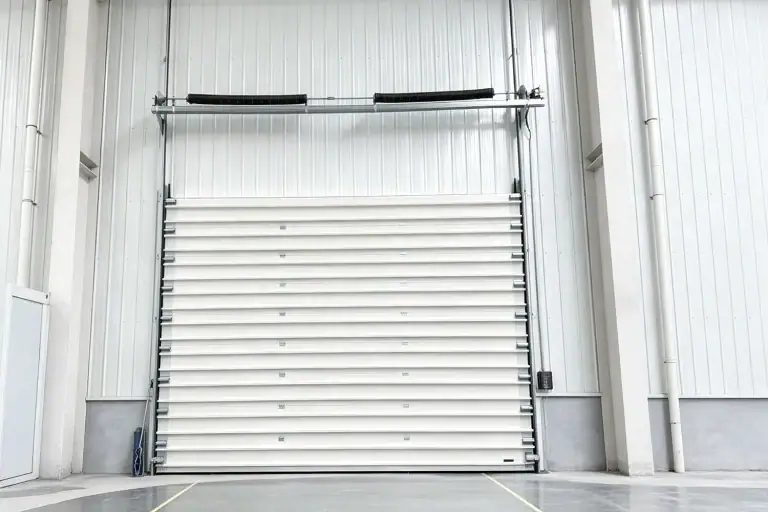
Best sectional doors for cold storage: a buyer’s guide
If you’re evaluating what is the best sectional door for a cold storage facility, the answer starts with two specs most buyers check last: insulation performance and sealing system integrity. Door-related infiltration and open time account for a significant share of controllable energy loss in many cold storage facilities, particularly at high-traffic openings where warm air enters repeatedly throughout the day. A poorly specified sectional door can cost more in annual energy waste and maintenance than the entire price difference between a budget option and a properly engineered one. That math holds across coolers, standard freezers, and blast freeze environments alike.
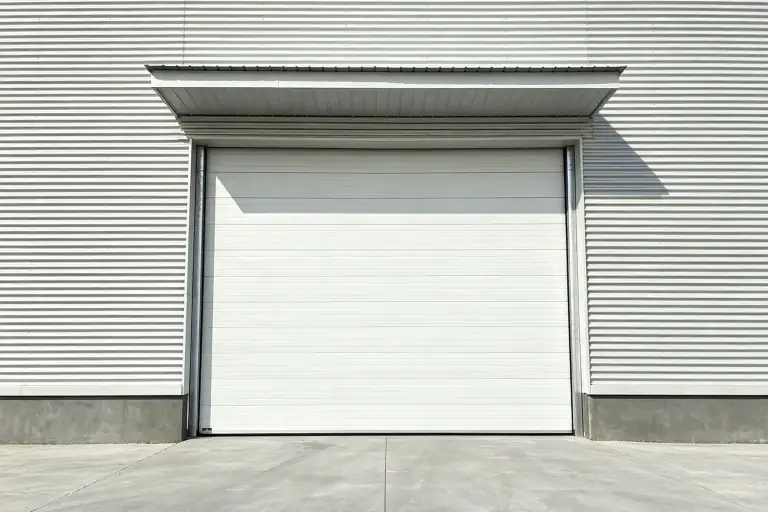
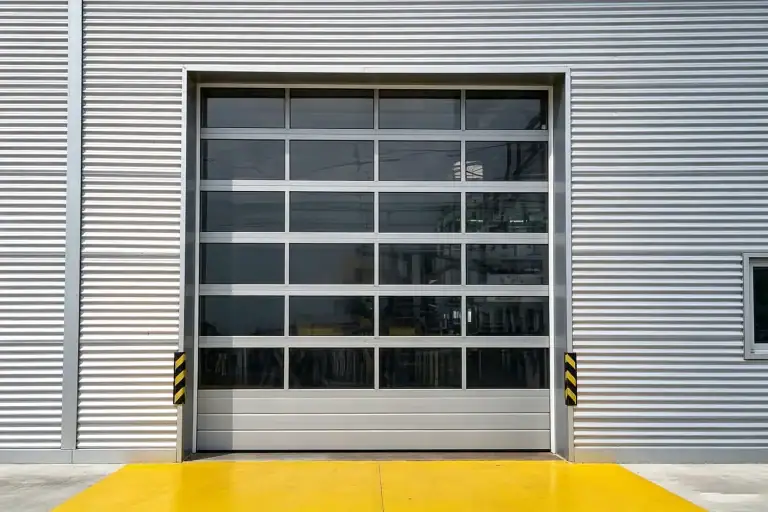
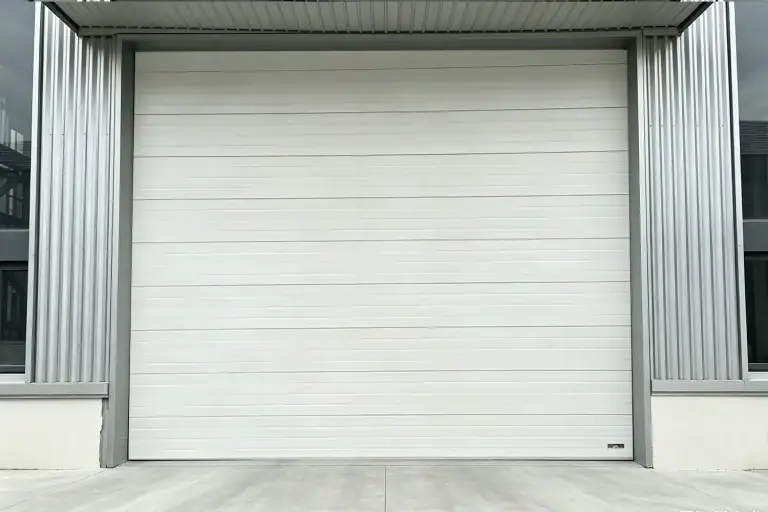
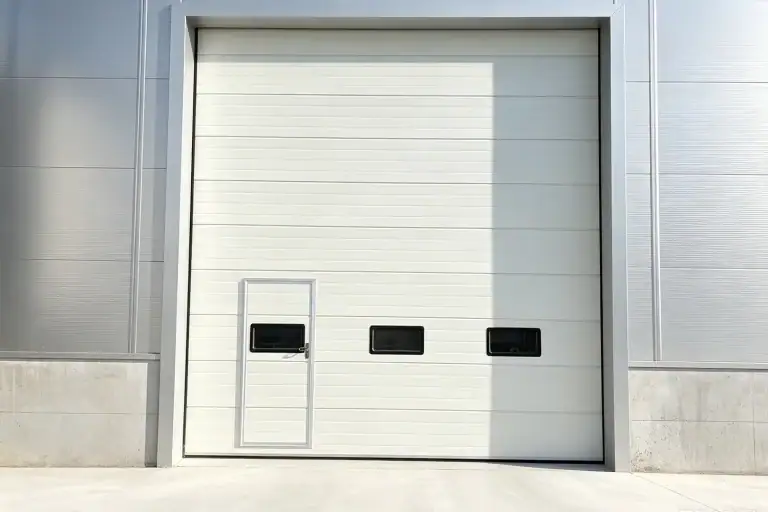
This guide covers the specifications that actually determine performance: insulation ratings by application, sealing systems that hold at low temperatures, condensation prevention design, cycle ratings matched to real traffic patterns, and realistic installed cost ranges. At ABX Doors, we build sectional doors in 40mm and 80mm high-density PU panel configurations with inflatable climate-control seals because those aren’t optional features in cold chain work, they’re the baseline we recommend for any serious cold storage application. Use this guide as a specification framework before you evaluate any door, including ours.

What is the best sectional door for a cold storage facility? Start with insulation
Before you compare prices or delivery timelines, insulation performance determines whether a door pays for itself. The R-value you need depends directly on the sustained operating temperature of the space, not the average temperature or the ambient reading during a mild season.
For cooler environments operating between 0°C and 10°C, R-12 to R-17 is the working range. Standard freezers running between -5°C and -18°C typically require R-25 to R-32 at minimum, though sustained operation at -18°C often demands R-35 to R-40 for robust thermal performance. Blast freeze applications below -20°C demand R-32 to R-40 or higher, with a U-factor approaching 0.07 representing the high-performance benchmark for door assemblies in demanding cold chain applications. These are minimums, not targets. Spec to the coldest sustained condition in the space.
Core material matters as much as panel thickness
Polyurethane (PUR) and polyisocyanurate (PIR) foams deliver R-6 to R-7 per inch. Expanded polystyrene (EPS) falls short at R-3.8 to R-4.4 per inch. That gap is significant: a 40mm PU core outperforms a 60mm EPS core, roughly R-9.4 to R-10.9 for the PU panel versus R-9.1 to R-10.6 for the thicker EPS one, with the PU option maintaining those values better through repeated temperature cycling. When comparing door quotes from different manufacturers, check both the thickness and the core material before reading the R-value claim. Foam density also affects how well the core bonds to steel skins through repeated temperature cycling, which matters for long-term panel integrity.
At ABX Doors, our panel options run from 40mm to 80mm high-density PU. Cold chain facilities typically specify 60mm to 80mm panels for freezer applications and 40mm to 50mm for cooler environments. Those aren’t arbitrary ranges. They reflect the calibration that emerges from building doors for facilities that measure energy consumption before and after installation.
The sealing system that keeps cold air where it belongs
A panel rated at R-32 is only as effective as the seal around its perimeter. Air infiltration at the edges, bottom, and corners causes more measurable energy loss in active facilities than thermal transmission through the panel itself. The seal system deserves the same specification rigor as the insulation value.
Every cold storage sectional door needs three sealing zones addressed: the perimeter (sides and top), the bottom threshold, and the panel-to-panel joint between sections. Magnetic gaskets outperform compression seals for perimeter sealing because they self-adjust to frame irregularities and maintain consistent contact force without depending on panel pressure. Sweep sill gaskets and impact-resistant thresholds handle the bottom seal. Vapor barrier integrity across all three zones prevents moisture migration from warm air into the cold space, the first failure mode in a leaking installation.
Inflatable seals represent a meaningful step up from standard compression gaskets in freezer environments. When the door closes, the inflatable seal pressurizes and conforms to the full perimeter of the frame, including sections that have minor warping or settling from thermal movement. This eliminates air pathways that compression seals can’t bridge. Our loading dock systems use inflatable climate-control seals for exactly this reason: in high-differential applications, static compression consistently fails to maintain the contact needed to prevent infiltration. It’s a spec worth requesting explicitly when evaluating any cold storage sectional door.
Best sectional door seals for cold storage facilities: material selection
EPDM rubber is the industry standard for cold storage gaskets. It stays flexible down to -40°C, resists UV and ozone, and holds its shape under constant compression. FDA-grade silicone is the right call where hygiene certifications require non-porous, easy-clean surfaces in food processing and pharmaceutical cold chains.
Avoid standard neoprene or PVC seals in freezer applications. Both materials are prone to stiffening and cracking at sustained low temperatures, and once a seal loses flexibility it cannot maintain consistent contact against the frame. EPDM and FDA-grade silicone remain the proven choices for cold storage service.
Condensation and frost: what causes them and how to stop them
Condensation in a cold storage door installation isn’t just an energy problem. Frost buildup around thresholds creates slip hazards. Moisture that cycles daily through a gasket ruins the seal and promotes mold growth. Addressing these issues requires understanding where the failure originates in the door assembly.
Thermal bridging is the hidden failure mode most spec sheets don’t surface clearly. It occurs when a conductive material, typically steel, aluminum, or fastener hardware, passes through the insulating core and creates a direct heat transfer path. On the door’s exterior face, the result is a cold spot. On the interior face, it’s a warm one. Both surfaces produce condensation. Doors with continuous PU foam injection, thermal-break frames, and isolated hardware mounting eliminate this. The indicators to look for in a spec sheet: fiberglass-reinforced framing, foam-injected cores (not slab-inserted), and non-metallic threshold brackets.
Three design elements specifically address condensation and are worth requesting as line items in any quotation:
- Double or triple gasket systems that create a dead-air space between the warm and cold sides
- Heated threshold options for facilities where floor-level frost recurs because forklift traffic is heavy enough to compromise bottom seals
- Panel coatings that reduce surface emissivity and resist moisture adhesion on the cold-side face
Many manufacturers offer some or all of these options, but none are automatic inclusions at the standard price point. Request line-item pricing for each so you can evaluate them on their own merits against your facility’s specific conditions.
Cycle ratings and hardware durability in freezer conditions
A door specification for a freezer receiving dock looks different from one for a cooler accessed twice a day. Cycle rating is a mechanical specification, but in cold environments it becomes a thermal durability question. Every time the door opens, it introduces warm moist air, stresses the spring system, and requires the gasket to reseat cleanly. Getting cycle ratings wrong costs you in maintenance budgets and unplanned downtime.
Industry-rated sectional door springs carry ratings from 25,000 to 100,000 cycles. A facility running 50 cycles per day reaches 100,000 cycles in roughly five and a half years. At that point, if springs haven’t been matched to both load and temperature, they fail. Cold environments accelerate metal fatigue, so spring ratings should be evaluated at operating temperature, not at ambient. A spring rated for 30,000 cycles at 20°C may not reach that count in a -18°C environment. Ask suppliers specifically for cold-temperature cycle test data, not just catalog ratings.
For hardware, stainless steel is preferable in high-humidity freezer environments. Standard zinc-plated components corrode within two to three years in these conditions, which turns a maintenance item into a structural replacement. Motor selection follows the same logic: standard 1/2 HP openers are adequate for low-cycle cooler doors, but high-cycle freezer dock doors require 1 HP operators with duty-cycle ratings matched to expected daily usage. For high-traffic distribution center docks running more than 50 cycles per day, the minimum recommended cycle rating is 100,000 cycles, with 250,000 or more appropriate for true distribution center environments running continuous shifts.
What cold storage sectional doors actually cost installed
Budget conversations about cold storage doors often start with the panel price and leave out everything else. Installed cost, covering door, frame, track, operator, controls, and labor, is the only number that matters for capital planning. The gap between panel price and installed cost is significant enough to change the comparison between options that appear close on a quote sheet.
For standard commercial sizes around 12×12 ft with R-12 to R-18 insulation, installed costs in the US market currently run $3,800 to $7,500. High-cycle or larger configurations at 16×16 ft and above, with R-25-plus panels and inflatable seals, reach $5,800 to $12,000 per opening. Installation labor alone typically runs $800 to $1,800 per door, covering spring tensioning, track alignment, and operator commissioning. Wind load engineering, smart access integration, and heated threshold options each add to that base figure. As of mid-2026, material tariffs have pushed steel and aluminum costs higher, so quotes from 2023 or 2024 are not reliable baselines for current project budgets.
The energy savings case for upgrading insulation specification is straightforward. Moving from R-12 to R-26 in a year-round freezer reduces refrigeration load meaningfully enough to recover the cost difference within a few years at typical US energy rates. The one variable that changes this math is traffic frequency. At more than 55 cycles per day, a high-speed roll-up door often delivers better energy performance than a higher-R sectional door because open time becomes the dominant energy variable, not thermal transmission. Match the door type to the traffic pattern first, then optimize the insulation spec within that choice.
What to ask any manufacturer before you place an order
The difference between a door that performs for 15 years and one that needs a major overhaul in year four often comes down to the quality of the conversation before purchase. A supplier who can answer these questions with documentation rather than verbal assurances is worth working with.
Any manufacturer building doors for cold storage should be able to provide the following:
- Tested R-value or U-factor with the test standard referenced (not an estimated calculation)
- Air leakage rate at both 15 mph and 25 mph wind pressure
- Spring and hardware cycle test data at operating temperature
- Gasket material specs including temperature rating
Manufacturers supplying US cold chain facilities should also be able to provide CAD drawings, wiring diagrams, and motor certifications. That documentation matters for facility design approval and building permit submissions, particularly in states with rigorous energy code review processes. ABX Doors provides this full documentation package as a standard part of any project engagement.
For US facilities, ANSI/DASMA 102 (construction standard) and DASMA 108 (wind load) are the primary compliance benchmarks for industrial sectional doors. ISO 9001 and ISO 14001 certifications on the manufacturing side signal process consistency, not just product claims. For cold storage facilities in food processing or pharmaceutical supply chains, ask specifically about FDA-grade material certifications for gaskets and any third-party hygiene testing. If the door is sourced from an overseas manufacturer, CE certification simplifies import documentation and customs clearance. Confirming all of this before ordering eliminates delays and code compliance issues during installation, expensive problems to solve after a project start date is set.
Choosing the right door is a specification problem, not a price problem
The best sectional door for a cold storage facility is the one specified correctly for the actual operating temperature, traffic frequency, and lifecycle cost target. It’s not the one with the lowest unit price or the thickest panel on a spec sheet.
Start with the R-value your application requires. Confirm the seal system performs at that temperature. Verify cycle ratings against your actual daily usage, not a theoretical average. Factor in full installed cost, controls, labor, and site variables, before comparing options on price alone. When you evaluate manufacturers, ask for documentation that shows tested performance rather than marketing claims.
Manufacturers who build purpose-built cold chain doors, with high-density PU insulation across the full thickness range, inflatable climate-control seals, and certifications that hold up at the permit desk, are the ones worth having a detailed conversation with. That documentation package is your first filter. If a supplier hesitates to provide it, that hesitation tells you what you need to know. If you’re working through a project specification for a US cold storage facility and want to see how ABX Doors’ panel and sealing systems map to your temperature requirements, our technical team can provide spec sheets, CAD files, and certified test data suited for building permit submissions.
CONTACT ABX
Your Direct Source for Industrial Access Solutions
We offer 24/7 support. Feel free to leave us a message — we'll reply within 24 hours.