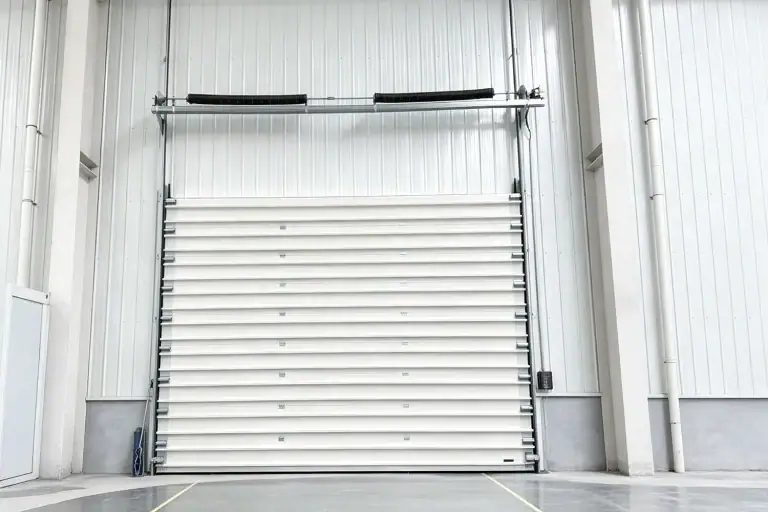
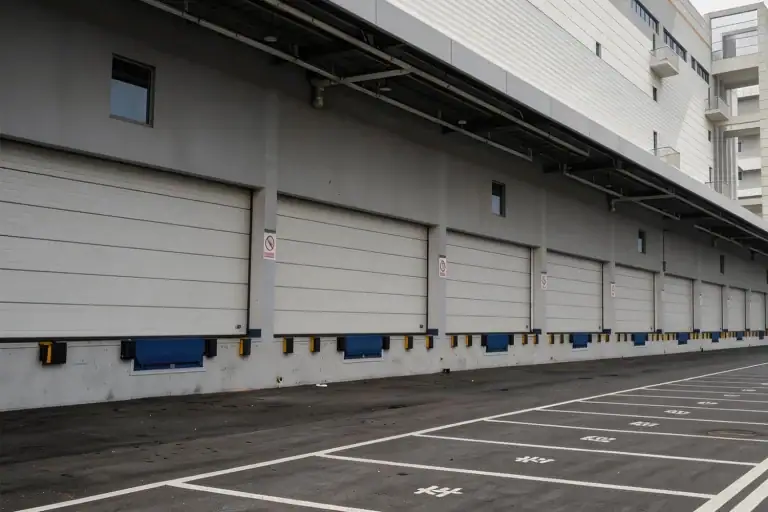
Importing CE-Certified Industrial Doors: A U.S. Guide
When importing CE-certified industrial doors for a U.S. facility project, one of the most expensive mistakes you can make is assuming European compliance documentation satisfies American building code requirements. Picture this: a shipment of industrial sectional doors arrives at port, CE marking clearly affixed, documentation in hand. The importer signs off, ships them to the job site, and submits for a building permit. The permit gets rejected. The building official doesn’t recognize CE marking. The project is now weeks behind, and the supplier is two time zones away. This scenario is more common than it should be, and it’s entirely avoidable.
CE certification is real, meaningful, and worth having. It just doesn’t do what many U.S. importers assume it does. This guide breaks down what CE marking actually covers for industrial doors, how it differs from U.S.-specific requirements, which documents to demand before signing any purchase order, and how to verify the certification is legitimate before your shipment leaves the factory floor. If you’d rather skip the research and work with a manufacturer who has already handled compliance on both sides of the Atlantic, contact ABX Doors to request technical documentation for your specific application.
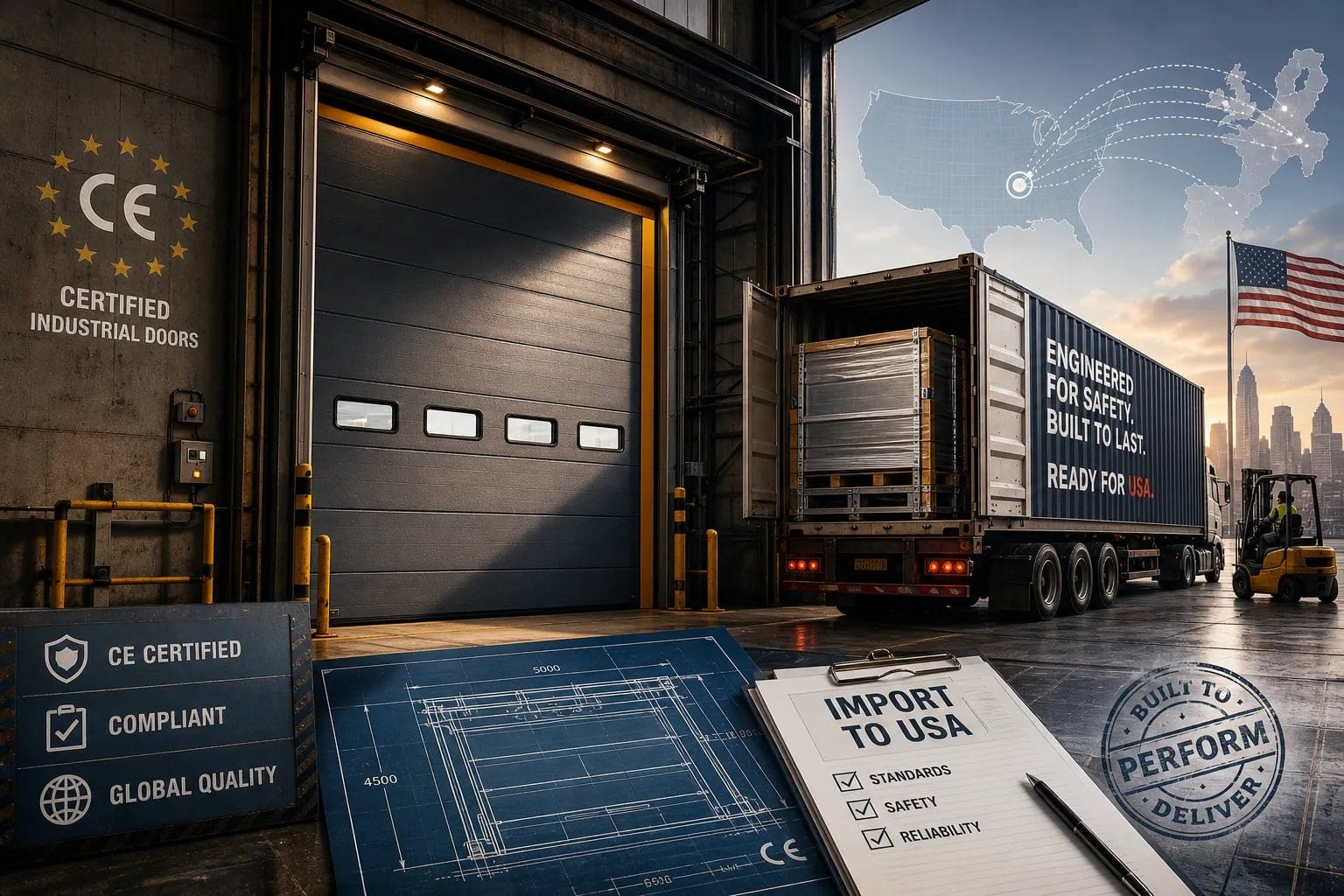
What CE certification actually means for industrial doors
CE marking on industrial and commercial doors is governed by EN 13241-1, the harmonized European product standard that covers performance characteristics including wind load resistance, air permeability, water tightness, thermal transmittance, mechanical resistance, and durability. A door carrying a CE mark has been assessed against these characteristics and found to meet minimum declared performance levels. The mark doesn’t confirm the door passed a single universal test. It confirms the manufacturer declared performance values aligned with EN 13241-1’s requirements.
For powered or automatic industrial doors, CE marking typically brings in additional standards: EN 12453 for safety in use of motorized doors, EN 12445 for force measurement testing, and EN 12604 for mechanical safety requirements. The specific scope depends on the door type and intended use. This matters to importers because the Declaration of Performance should explicitly name which standards apply and what performance levels were declared. Vague references to “EN 13241-1 compliance” without declared performance values are a warning sign, not a green light.
When Notified Body involvement is required
Not every CE-marked door requires third-party Notified Body involvement. Self-declaration is acceptable in certain assessment categories when the manufacturer has conducted necessary type testing through an accredited lab and compiled a complete technical file. Notified Body involvement becomes mandatory when the door involves fire resistance, smoke control, or falls under an assessment system that requires independent conformity verification. Knowing this distinction helps you ask the right questions and catch documentation that has been inflated.
Importing CE-certified industrial doors into a U.S. market: understanding the compliance gap
ANSI/DASMA standards are the U.S.-market framework for industrial sectional doors, and they address completely different requirements than EN 13241-1. DASMA 102 covers construction and design for sectional doors. DASMA 108 addresses wind load resistance. DASMA 109 covers lifecycle performance and spring cycle testing. These are the standards that U.S. project engineers, general contractors, and building officials typically reference when reviewing door specifications on a permit application.
CE marking does not by itself satisfy IBC or state building code requirements and is generally not accepted as sole evidence of compliance by U.S. authorities having jurisdiction (AHJs). An importer presenting only CE documentation at a U.S. permit review will almost certainly face rejection. In wind-load-sensitive regions, states like Florida, Texas, and coastal areas along the Gulf, compliance with U.S. wind-load design and test requirements is essential. DASMA 108 compliance isn’t optional; it’s the baseline. CE documentation doesn’t satisfy that requirement, regardless of how rigorous the European testing was.
In practice, many overseas manufacturers specialize in one compliance framework or the other, rarely both, because dual certification requires separate testing infrastructure, documentation workflows, and market expertise. U.S. importers end up chasing two separate document sets, managing two testing regimes, or discovering mid-project that their supplier is only equipped to cover one market. Identifying a manufacturer who already holds both certifications before the purchase order is signed is the most reliable way to avoid that situation entirely.
Importing CE-certified industrial doors: the document package to verify
The Declaration of Performance (DoP) is the mandatory CE document for industrial doors sold as construction products. It identifies the product type, the harmonized standard applied, declared performance levels, and the assessment system used. For power-operated or automatic doors, you also need the Declaration of Conformity (DoC), which addresses Machinery Directive requirements. Both documents must reference specific standards with specific declared values. Generic language with no performance figures is not acceptable documentation.
Behind the DoP sits the technical file: test reports from accredited labs, a risk assessment, a bill of materials, and manufacturing documentation that supports the declared performance. If the door falls under an assessment system requiring a Notified Body, request that certificate directly and verify that the Notified Body number on the certificate matches what appears in the EU’s NANDO database. Test reports must match the exact product configuration you’re ordering, not a similar model or a previous product generation.
Red flags in supplier documentation
Watch for these warning signs when reviewing supplier documentation:
- CE certificates with no Notified Body number for a door category that requires one
- Test reports referencing different door dimensions or configurations than what you’re ordering
- DoPs with no specific declared performance values
- Certificates with mismatched dates, issuer details, or no supporting technical file available on request
Any one of these signals that the CE mark may not be supported by legitimate testing. A manufacturer with a clean compliance record will produce the full documentation package without hesitation. One that pushes back or delays is telling you something.
How to verify a CE certificate before your shipment leaves the factory
The EU’s NANDO database (New Approach Notified and Designated Organizations), maintained by the European Commission, is your primary verification tool. It’s publicly accessible and lists every Notified Body authorized for specific product directives or regulations. When a supplier provides a certificate with a Notified Body number, look it up in NANDO and confirm the body is currently authorized for the relevant product category. A valid Notified Body number for one directive does not automatically validate a certificate issued under a different product scope.
Verify the certificate chain directly
For certification bodies that maintain public verification portals, search the certificate number directly. If no portal exists, contact the issuer by email or phone and ask them to confirm the certificate number, the manufacturer name, and the product scope. Then cross-reference that information against the DoP and technical file. A legitimate CE compliance package is fully traceable: the certificate traces to the issuing body, the Notified Body number traces to NANDO, and the test reports trace to accredited results for the specific product being ordered.
If a supplier resists providing documentation or can’t confirm certificate details through a traceable chain, treat that as disqualifying. Legitimate manufacturers don’t have trouble producing this paperwork because they built their compliance process around it.
What U.S. Customs actually requires when your shipment arrives
U.S. Customs and Border Protection processes industrial door imports under standard commercial entry procedures. That means a commercial invoice, packing list, bill of lading, and entry summary. Accurate HTS classification is critical because industrial sectional doors fall under specific subheadings, and misclassification creates delays, additional duties, and potential penalties. Country-of-origin marking must be correct and visible on the product or packaging. CE certification documents are not part of the CBP entry package and won’t be reviewed by customs officers. They serve a completely separate compliance purpose.
For China-origin industrial sectional doors, importers should also account for Section 301 tariffs, which add a significant duty percentage on top of the standard MFN rate. The all-in duty burden for steel or aluminum door assemblies from China can reach 25% or more above the base rate depending on HTS classification. This is a landed cost calculation that needs to factor into sourcing decisions, not an afterthought at the customs broker stage.
If the industrial doors include motorized operators or automated control systems, additional U.S. compliance documentation may apply to the drive units. CE marking on the door assembly does not cover U.S. electrical and safety requirements for powered equipment. Importers should confirm what certifications apply to the operators specifically and whether those certifications satisfy project specifications. Incomplete documentation on powered assemblies is a recognized source of unexpected customs holds and post-entry compliance issues.
Why a dual-certified manufacturer is the cleanest solution
For U.S. importers, sourcing from a manufacturer that already holds both CE and ANSI/DASMA certifications is a practical way to eliminate dual-compliance friction. It removes the need to manage two separate compliance tracks, chase documentation from different testing regimes, or find out mid-project that your supplier’s paperwork only covers one market. When U.S. building permits require DASMA 102, 108, and 109 compliance, having that documentation ready from day one is what keeps projects on schedule.
How ABX Doors handles compliance for both markets
ABX Doors is designed for exactly this use case. As a manufacturer with CE certification and ANSI/DASMA 102, 108, and 109 compliance, ABX supports U.S. importers who need documentation that works on both sides of the Atlantic. Their industrial sectional doors are engineered to address structural, wind load, and lifecycle performance requirements that U.S. building officials review. Documentation packages include technical specs, CAD drawings, wiring manuals, and certification records structured for U.S. project approval workflows. For distributors, facility developers, and importers who need a supplier that can deliver complete compliance documentation from the start, ABX Doors is equipped to fill that role.
The bottom line for U.S. importers
CE certification for industrial doors demonstrates compliance with European product standards. It does not replace ANSI/DASMA requirements, satisfy U.S. building code reviews, or affect how CBP processes your shipment. The importers who run into problems are the ones who assume one compliance framework covers all markets. It doesn’t, and the building permit rejection or customs hold is where that assumption becomes expensive.
When importing CE-certified industrial doors for a U.S. project, the practical approach is consistent: require complete documentation before committing to any purchase order, verify Notified Body numbers in the NANDO database, and source from a manufacturer who already holds both CE and ANSI/DASMA certifications. That combination eliminates the rework, the permit rejections, and the sourcing compromises that slow projects down and drive up costs.
If you’re sourcing industrial sectional doors for a U.S. facility project and want a manufacturer who has already done the compliance work on both sides of the Atlantic, contact ABX Doors to request technical documentation, CAD drawings, and certification records for your specific application.
CONTACT ABX
Your Direct Source for Industrial Access Solutions
We offer 24/7 support. Feel free to leave us a message — we'll reply within 24 hours.