CE Certified Sectional Doors: What US Buyers Must Know
When US-based contractors, facility managers, and distributors source industrial sectional doors from overseas, they frequently encounter the ‘CE’ mark. While CE certification is the gold standard for the European Economic Area, US buyers often ask: Does CE certification satisfy US customs and local building codes? The short answer is no—but it remains a critical indicator of manufacturing quality. To ensure seamless project approvals and safe operations, US importers must understand how to leverage CE certification alongside mandatory American standards.
1. What Does the CE Mark Actually Mean for Industrial Doors?
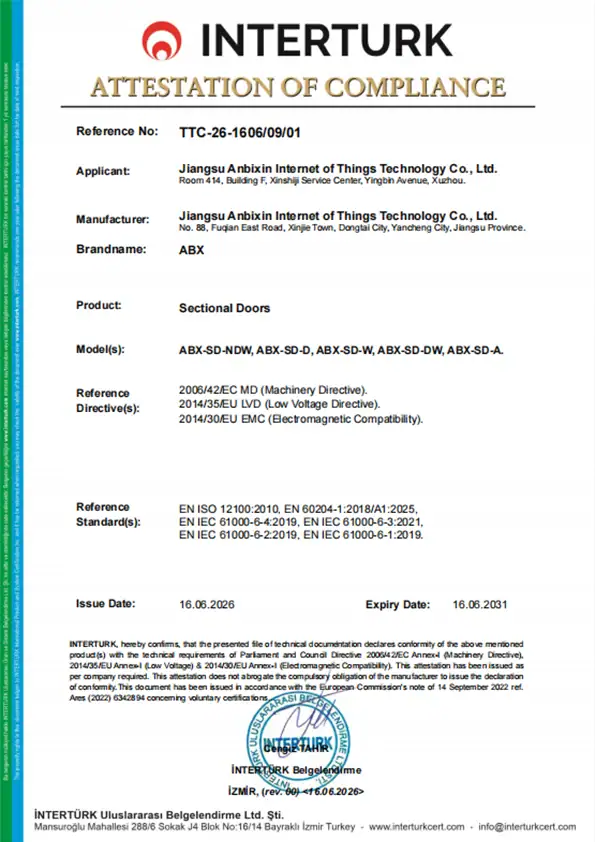
The CE (Conformité Européenne) mark indicates that a product complies with EU safety, health, and environmental protection requirements. For industrial sectional doors, CE certification primarily covers the electrical components (such as servo motors and IoT control boxes) and baseline mechanical safety mechanisms (like anti-pinch designs and spring break protection).
For a US buyer, seeing a CE mark on an imported door provides immediate assurance that the overseas factory operates with strict quality control and standardized assembly processes, rather than producing unregulated, low-tier goods.
2. Bridging the Gap: Why CE Must Pair with ANSI/DASMA
While CE certification proves baseline electrical and mechanical safety, US building inspectors and customs officials look for compliance with American structural standards. Relying solely on CE certification can lead to failed local inspections, especially regarding wind load and thermal performance. To clear US regulations, the doors must comply with the Door & Access Systems Manufacturers Association (DASMA) and ANSI standards.
| Standard | Focus Area | Why US Buyers Need It |
|---|---|---|
| CE Certification | Electrical safety, basic mechanical safety, factory QC. | Ensures the motor and control systems won’t cause electrical hazards or workplace accidents. |
| ANSI/DASMA 102 & 105 | Structural performance and thermal transmittance. | Mandatory for proving energy efficiency (R-value) to US facility owners. |
| ANSI/DASMA 108 | Wind load resistance testing. | Critical for passing building codes in coastal or high-wind zones (e.g., Florida, Texas). |
| ANSI/DASMA 109 & 110 | Torsion spring life cycle and fire ratings. | Guarantees long-term durability and facility safety compliance. |
3. Streamlining US Customs and Project Approvals
Importing industrial doors without the correct documentation leads to port delays and demurrage fees. A savvy US importer looks for a manufacturer that provides a comprehensive compliance package. This includes CE certificates for the motor systems, ISO 9001/14001/45001 factory audits, and verifiable ANSI/DASMA testing reports for the door panels and hardware.
4. Partner with a Dual-Certified Source Manufacturer
Eliminate the guesswork from your overseas sourcing strategy. ABX Doors is a premier OEM/ODM manufacturer with over 15 years of experience, trusted by global logistics leaders like GLP, UPS, and ESR. We don’t just build doors; we engineer compliance.
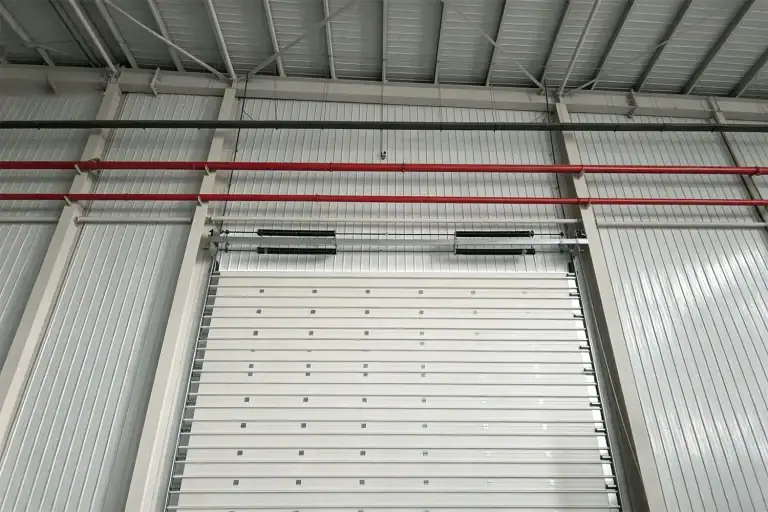
Our heavy-duty industrial sectional doors are fully CE and EAC certified, while proactively meeting ANSI/DASMA 102, 105, 108, 109, and 110 standards. Whether you need R-17 insulated panels for cold storage or Category 12 typhoon-rated wind resistance, our 36,000 sqm intelligent manufacturing base delivers pre-certified solutions ready for the American market.
Secure Your Next US Project
Don’t risk your project timeline on non-compliant hardware. [Internal Link Placeholder: Download our comprehensive ANSI/DASMA and CE compliance documentation] today. Contact the ABX global engineering team for a custom quote and seamless import consultation.
CONTACT ABX
Your Direct Source for Industrial Access Solutions
We offer 24/7 support. Feel free to leave us a message — we'll reply within 24 hours.