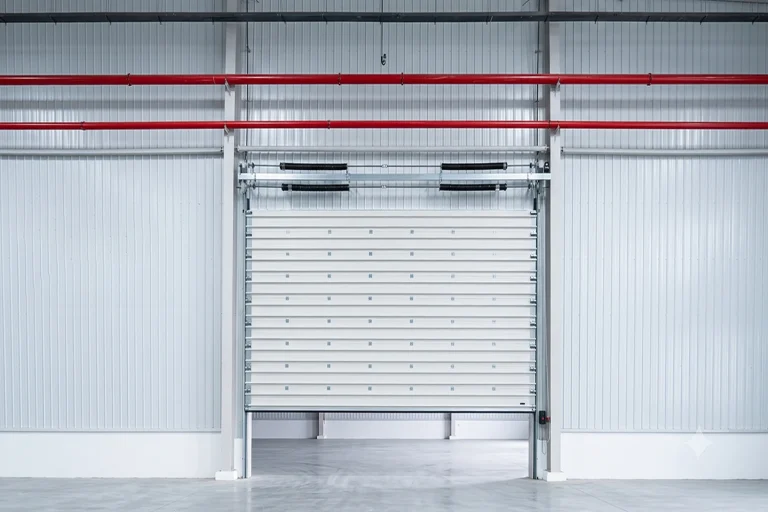
Customizing Industrial Sectional Doors: From PU Foam Density to Track Configurations
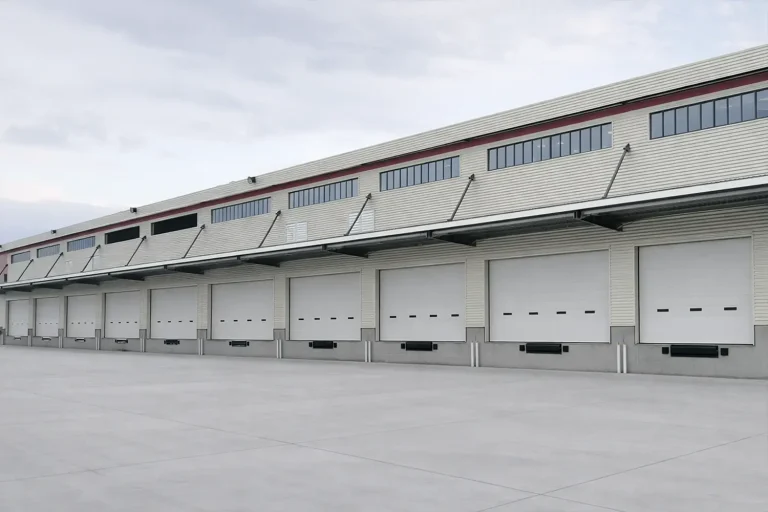
In the realm of modern commercial architecture and mega-logistics development, the ‘one-size-fits-all’ approach to industrial doors is a critical engineering failure. A distribution center in the humid, hurricane-prone Gulf Coast requires vastly different specifications than a deep-freeze pharmaceutical warehouse in the Pacific Northwest. When architects and Engineering, Procurement, and Construction (EPC) contractors design specialized facilities, they must partner with a manufacturer capable of deep, structural customization. This technical guide explores the critical customization parameters of industrial sectional doors, from core thermodynamics to architectural track configurations.
Thermodynamic Customization: PU Foam Density and Panel Thickness
The thermal envelope of a building is heavily dependent on the insulation properties of its exterior doors. Customizing the thermal resistance (R-value) begins with the core material. While standard commercial doors utilize expanded polystyrene (EPS), high-performance facilities require injected Polyurethane (PU) foam.
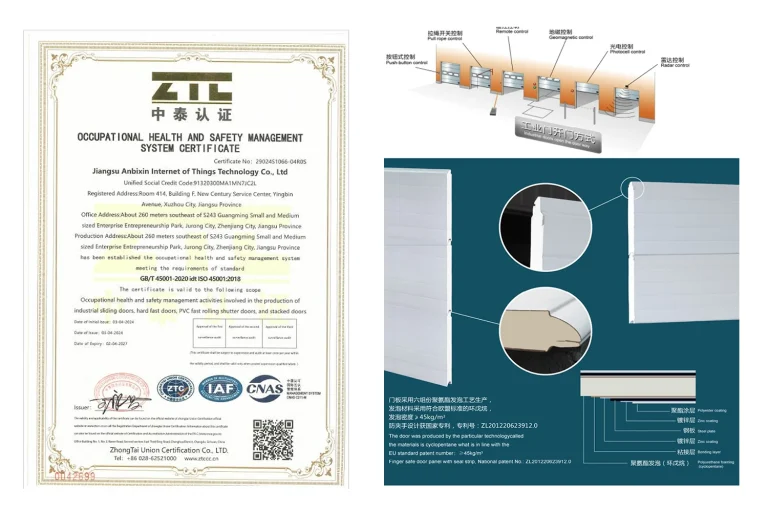
A premier OEM manufacturer allows buyers to customize both the density of the foam and the overall thickness of the panel. For standard climate-controlled warehouses, a 40mm or 50mm panel injected with CFC-free cyclopentane PU foam at a density of 45-48 kg/m³ provides exceptional baseline insulation. However, for deep-freeze cold storage facilities operating at -20°C, the specification must be upgraded to an 80mm panel. When combined with a patented broken-bridge thermal break design, this 80mm high-density configuration achieves an R-value up to 17 (K≤0.8W/m³.K), completely eliminating interior condensation and drastically reducing HVAC electrical loads.
Structural Customization: Wind Load and Hardware Durability
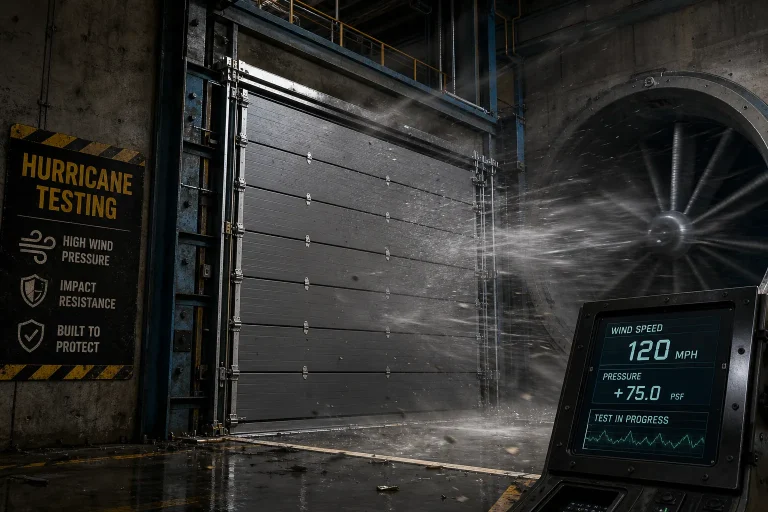
Customizing a door’s structural integrity is dictated by its geographic location and operational frequency. For facilities in high-velocity hurricane zones (HVHZ), the door panels must be reinforced with heavy-duty steel wind struts (U-bars). By customizing the number and depth of these struts, manufacturers like ABX Doors can engineer sectional doors to withstand extreme wind pressures up to 700N/m², equivalent to a Category 12 Typhoon, ensuring compliance with strict ANSI/DASMA 108 standards.
Equally important is customizing the hardware for the facility’s specific traffic volume. A standard 10,000-cycle torsion spring will fail rapidly in a busy logistics hub. Procurement managers must specify high-cycle hardware, upgrading to shot-peened 55CrSi or 60Si2Mn steel torsion springs custom-calibrated for 30,000, 50,000, or even 100,000+ cycles. This customization is paired with 1.8mm heavy-duty galvanized steel tracks featuring bolt-on connections to ensure maximum longevity under relentless dynamic stress.
Architectural Customization: Track Configurations
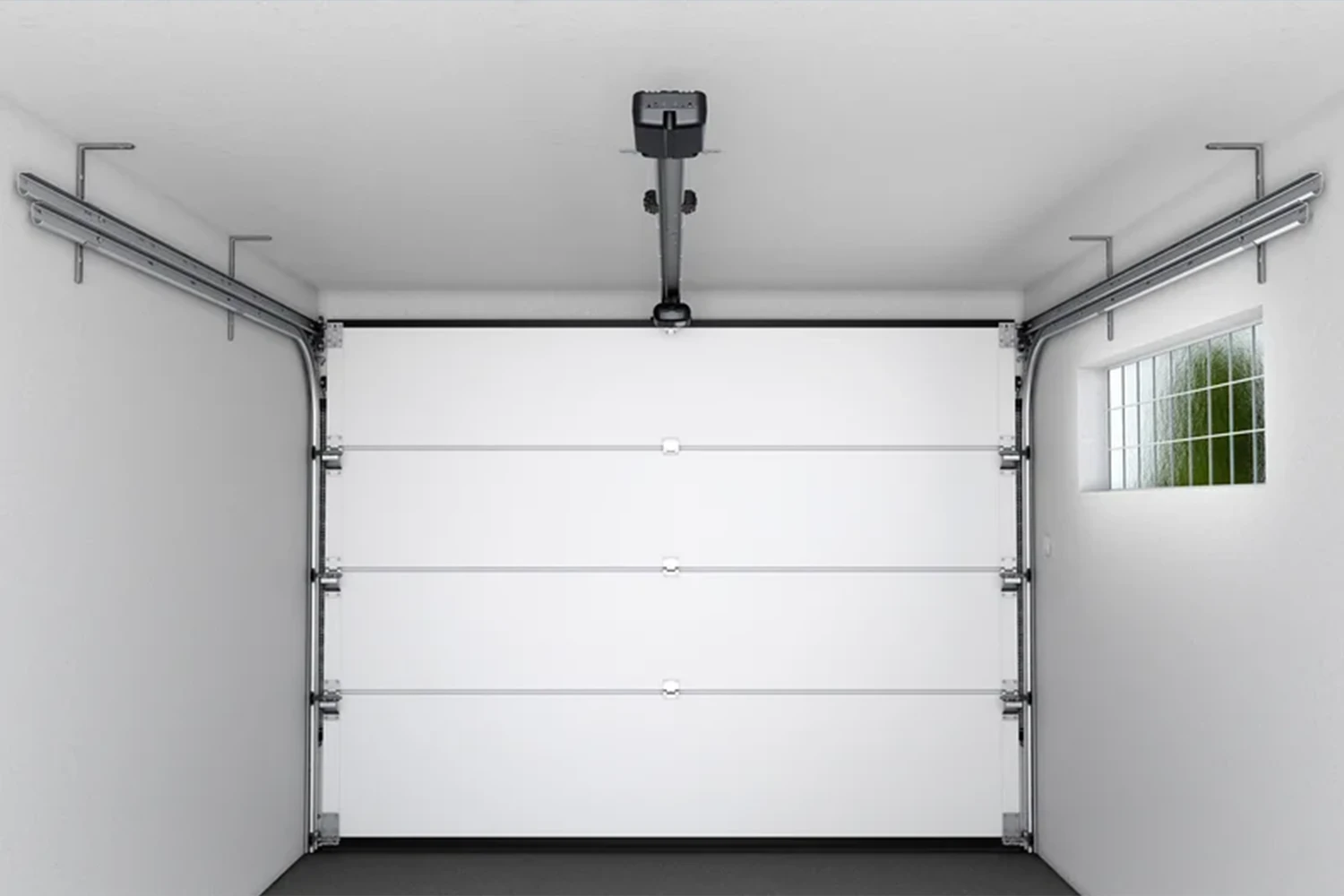
The interior architecture of a commercial building rarely accommodates a standard door installation. Overhead cranes, HVAC ductwork, and high-bay racking systems dictate how the door must open. Customizing the track configuration is essential for maximizing usable interior space.
- Standard Lift: The baseline configuration where the door rises vertically for a short distance before curving horizontally parallel to the ceiling. Ideal for standard warehouses with limited headroom.
- High Lift: Custom-engineered for facilities with tall ceilings. The tracks guide the door vertically up the wall for a specified distance (e.g., 3 to 5 meters) before curving horizontally. This keeps the lower ceiling area completely clear for machinery or lighting.
- Vertical Lift: The ultimate solution for mega-facilities and aircraft hangars. The door rises straight up the interior wall without ever curving horizontally. This requires precise customization of the cable drums and torsion springs to safely counterbalance the massive vertical dead weight.
Automation Customization: Smart IoT Integration
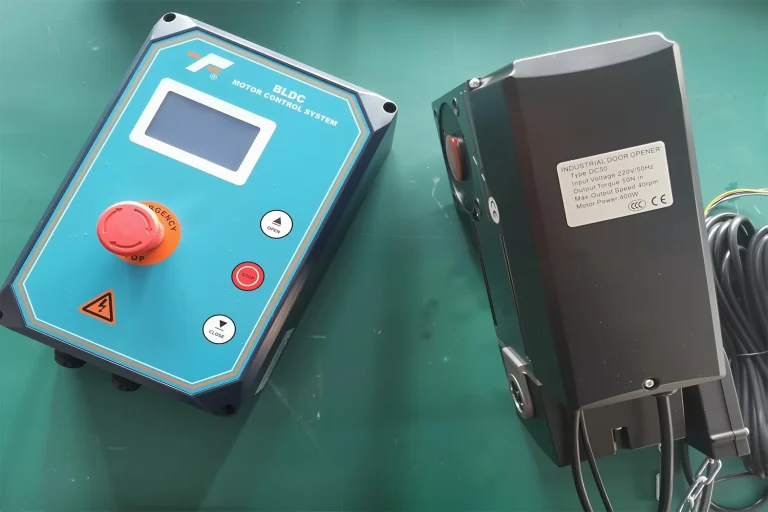
In Industry 4.0 environments, the door’s ‘brain’ must be as customized as its body. Modern facilities require doors equipped with Smart IoT centralized control boxes. These controllers can be customized with industrial-grade serial connections (RS485, Modbus) to integrate seamlessly with the facility’s Distributed Control System (DCS) or Programmable Logic Controllers (PLC). For automated logistics hubs, the control logic can be tailored to interface with Automated Guided Vehicles (AGVs) via radar or geomagnetic sensors, enabling millisecond-response, 100% unmanned passage.
Sourcing highly customized industrial doors requires bypassing regional middlemen and partnering directly with a source factory. By leveraging a 36,000 sqm intelligent manufacturing base equipped with automated continuous production lines, ABX Doors empowers architects and EPC contractors to engineer bespoke passage solutions that perfectly align with their project’s exact thermodynamic, structural, and architectural demands.
CONTACT ABX
Your Direct Source for Industrial Access Solutions
We offer 24/7 support. Feel free to leave us a message — we'll reply within 24 hours.