How to Choose the Right Dock Leveler for Your Warehouse
Picture a warehouse manager who inherited a dock with the wrong leveler type specified at build-out. Operators may spend several minutes each shift working around a mechanical unit that’s too slow for the volume, springs fatiguing faster than the maintenance budget allows, and a height range that barely covers the carrier mix. The freight still moves, but it costs more per truck than it should, and it will keep costing more until the equipment is replaced.
So how do I choose the right dock leveler for my warehouse, and how do you make that call before the wrong unit is already in the pit? Dock levelers aren’t interchangeable. The wrong type drives up downtime, accelerates forklift wear on rough transitions, and creates maintenance callouts that stack up quietly until someone runs the numbers. Matching a leveler system to your dock profile is straightforward once you know which variables to work through. By the end of this guide, you’ll know which type fits your operation, how to size it for your heaviest load conditions, and exactly what to confirm before you sign a purchase order. Manufacturers like ABX Doors publish detailed specification sheets that walk facility managers through matching leveler systems to throughput demands and climate conditions, knowing how to use that documentation is half the battle.
The main dock leveler types and what each one actually does
Pit-recessed levelers: mechanical and hydraulic
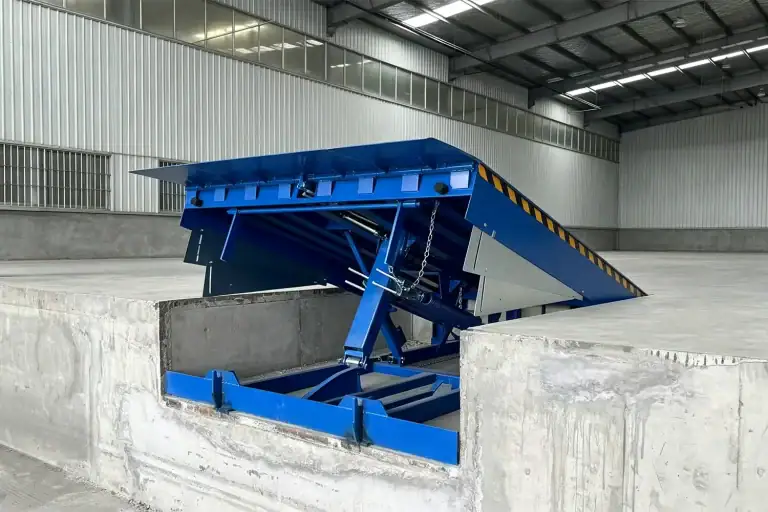
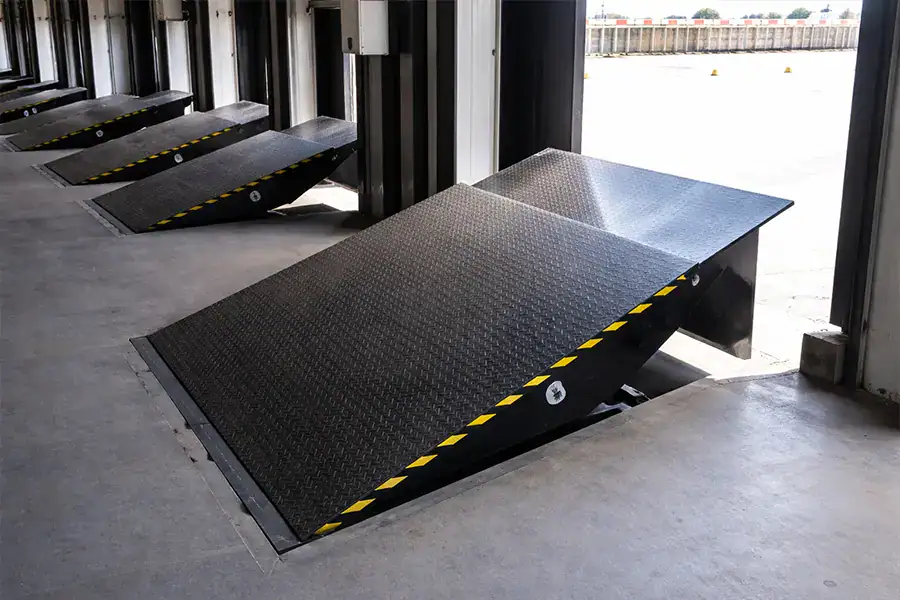
Mechanical levelers work through spring tension. The operator pulls a chain to release the stored energy, raises the deck, then walks it down to the trailer bed. The mechanics are simple, parts are widely available, and there’s no electrical system to maintain. The tradeoff is physical labor per cycle and a reliance on springs that fatigue faster in high-frequency environments.
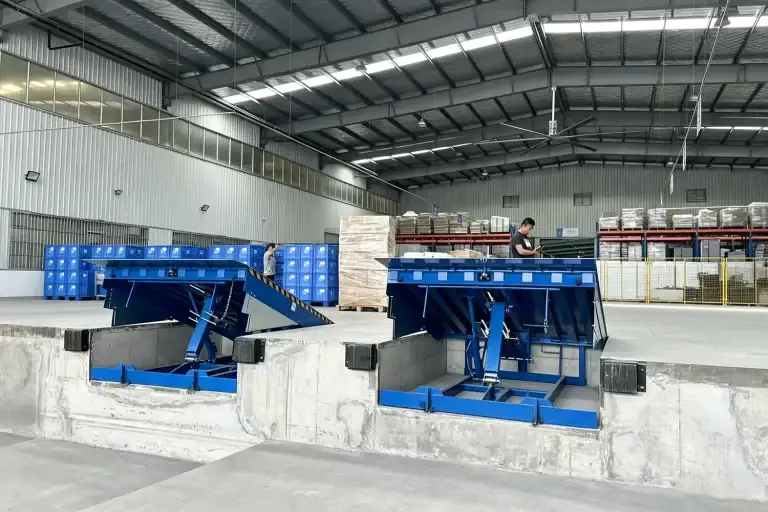
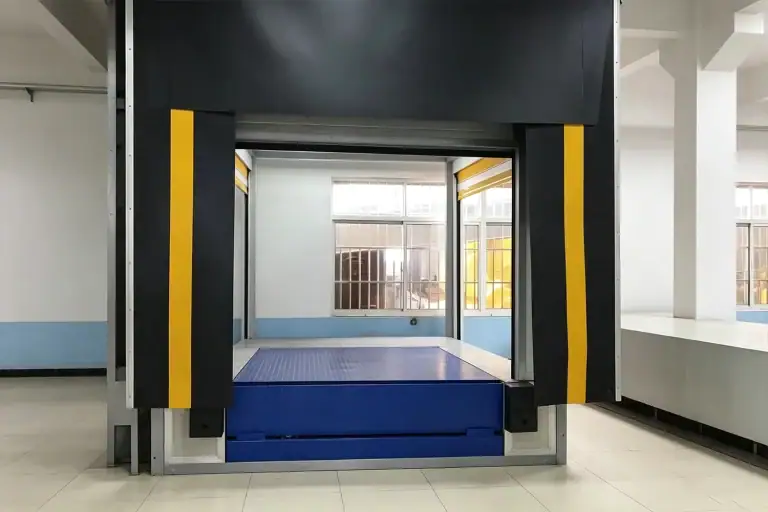
Hydraulic levelers replace that process with a push-button. An electric pump raises the platform and extends the lip automatically, delivering consistent positioning with minimal operator effort. Both types sit in a concrete pit, which creates a seamless dock-to-trailer transition and provides a working range of plus or minus 12 inches, covering trailer bed heights from roughly 36 inches to 60 inches.
Pneumatic, edge-of-dock, and vertical options
Pneumatic levelers use an air bladder to lift the deck instead of hydraulic fluid. They sit in the middle ground between cost and automation, and because there’s no hydraulic circuit, there’s no fluid leak risk. That makes them a practical choice for facilities that want push-button operation without the service complexity of a hydraulic system.
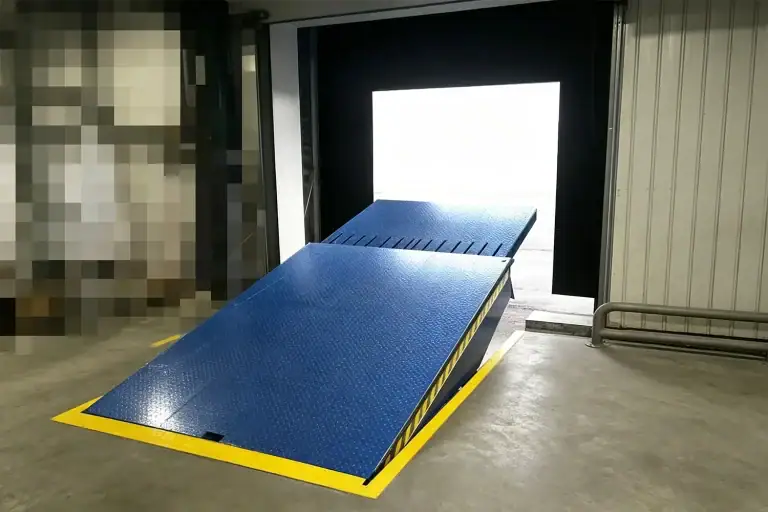
Edge-of-dock (EOD) levelers are face-mounted units that require no concrete pit. They’re compact, fast to install, and significantly cheaper upfront. The limitation is their working range, which tops out at plus or minus 5 inches. If your carrier mix is consistent and truck beds stay close to dock level, an EOD unit does the job well. If your fleet varies widely in bed height, that limited range becomes a real operational problem.
Vertical-storing levelers are exactly what the name suggests: the deck stores upright when not in use. That design minimizes energy exchange through the dock opening, which matters in refrigerated environments. If you operate a cold storage facility or a pharmaceutical dock with strict hygiene requirements, vertical-storing or pneumatic levelers deserve a close look before you default to a standard pit hydraulic unit.
How do I choose the right dock leveler for my warehouse?
Operation, cycle capacity, and climate performance
Hydraulic systems are built for consistent, high-frequency use. Push-button operation cuts down on operator error and physical fatigue, and the system performs the same on the tenth truck of the day as it does on the first. For higher-frequency docks, often referenced in industry guidance as those approaching 7 to 10 or more trucks per shift, that consistency becomes an operational requirement rather than a luxury. In cold climates, hydraulic fluid viscosity is the main variable to manage, addressed by specifying the right fluid grade for your ambient temperature range.
Mechanical levelers work well in lower-volume operations. In environments handling fewer trucks per shift, examples in field guidance often reference fewer than 7 to 8 trucks per day, the simplicity of a mechanical system is a genuine advantage. Springs and chains are easy to inspect, easy to replace, and the system needs no electrical infrastructure. Problems start when volume increases or temperatures drop, because spring fatigue accelerates with cycle count and cold conditions make physical operation harder on operators.
If your dock runs two shifts or handles time-sensitive freight, the cycle capacity gap between mechanical and hydraulic becomes a real operational factor, not just a spec sheet number. That’s the point where a higher upfront investment in hydraulic equipment starts paying for itself in throughput and reduced maintenance frequency.
Maintenance demands over time
Mechanical systems need hands-on inspection every 6 to 12 months. Springs, chains, and latches are the primary wear points, and service costs are lower per visit. The tradeoff is that high-volume environments chew through those components faster, pushing maintenance frequency up even when the service cost per event stays low.
Hydraulic systems stretch service intervals to 12 to 18 months, but each service event involves fluid checks, cylinder inspection, and electrical components. Per-visit costs run higher, and when hydraulic systems develop problems, they tend to be more involved to diagnose. One specific failure mode worth asking about: standard cylinder designs can develop slow oil leaks over time, affecting both maintenance costs and dock cleanliness. Before finalizing any hydraulic leveler purchase, confirm whether the manufacturer’s design addresses oil leak prevention at the cylinder level, ask specifically about cylinder orientation and seal design, because that decision affects your maintenance cost and dock cleanliness for the life of the unit.
Which facility type fits each system
Mechanical levelers fit lower-volume distribution points, secondary loading bays, and facilities with tight capital budgets where throughput demands don’t justify hydraulic infrastructure. Hydraulic levelers are the right call for primary high-throughput bays, cold chain operations, and manufacturing or automotive plants running heavy pallet loads with continuous forklift traffic. Those environments need the precision, reliability, and reduced operator burden that hydraulic systems deliver.
Pit leveler vs. edge-of-dock: what your dock profile decides
When pit installation is worth the concrete work
The core tradeoff between pit and edge-of-dock comes down to working range versus upfront cost and concrete investment. Pit levelers provide a plus-or-minus 12-inch working range that covers semi-trailer bed heights from 36 inches to 60 inches, a span that accommodates meaningful dock height variation across a mixed carrier fleet. If your facility services a diverse range of carriers, that range is non-negotiable. A standard pit installation requires a width equal to the platform width plus 40mm, a depth of approximately 500mm to accommodate the closed-height frame, and enough length to cover the full deck and rear housing. If the pit doesn’t exist yet, budget for concrete work on top of the unit cost and confirm that your concrete spec meets the load transfer requirements for your leveler’s rated capacity.
Facilities with long planning horizons often justify pit installation upfront. The working range flexibility protects against carrier fleet changes, including shifts in trailer height standards as fleets age or expand, and the seamless transition reduces forklift wear that accumulates over thousands of cycles. When throughput projections and carrier variability both point toward a pit, the total cost of ownership analysis usually supports the decision.
When edge-of-dock is the smarter call
EOD levelers are face-mounted, require no pit, and install at a fraction of the total cost. They’re the right call when truck bed heights at your dock are consistent and stay within plus or minus 5 inches of your dock floor level. Typical capacity for EOD units tops out at 20,000 to 35,000 lbs. If your heaviest forklift-plus-load combination exceeds that, an EOD unit isn’t a safe option regardless of the cost savings.
EOD levelers are a solid fit for secondary or overflow docks, satellite distribution points, and low-volume facilities where carrier fleet consistency is high and throughput demands are modest. Using them as a primary solution at a high-volume bay is where the limited range and lower capacity ceiling become operational liabilities.
Sizing your leveler correctly: load capacity and dock height
The load capacity formula you need to run
Start with the Gross Vehicle Weight (GVW) of your forklift, machine weight plus maximum load plus any attachments. Then apply a dynamic load multiplier. The standard multiplier for normal use is 2.5, per manufacturer and ANSI guidance. For three-wheeled forklifts or travel speeds above 4 mph, many guidelines reference an adjusted multiplier of approximately 2.55. For very heavy loads combined with high-frequency conditions, multipliers in the range of 3.0 to 4.0 may be appropriate, confirm the right figure with your equipment manufacturer and relevant ANSI standards for your specific application.
A concrete example: a 10,000-lb forklift carrying a 5,000-lb load equals a 15,000-lb GVW. Multiply by 2.5 and you get 37,500 lbs. Round up to the next standard rating, 40,000 lbs. That’s your minimum leveler capacity. Always run this calculation using the heaviest forklift and the heaviest load that will ever operate on that leveler, not your average conditions. Peak load events are what break equipment, and they happen more often than averages suggest.
Standard dock height and pit dimensions to confirm before ordering
Standard U.S. dock height runs 48 to 52 inches. For mixed LTL freight, 48 inches is the most common reference point. Set your dock height at the midpoint of your expected truck bed range so the leveler’s working envelope is balanced above and below dock level rather than pushed to one extreme.
Standard pit working range is plus or minus 12 inches. Some specialized models offer extended vertical travel, but those configurations are uncommon, typically require a deeper pit and a longer deck, and should be confirmed directly with the manufacturer, note that an “18-inch” spec on some models refers to lip extension length, not vertical deck travel. Lip projection should extend at least 12 inches beyond the dock bumpers to maintain a safe forklift transition onto the trailer bed. Confirm that specification explicitly when reviewing drawings, because short lip projection is a common source of rough transitions and accelerated wear.
Cost and maintenance numbers side by side
What to budget for each system in 2026
Mechanical pit levelers run $5,500 to $11,000 installed, assuming the pit is already poured. Annual maintenance falls between $300 and $800 for standard use, and up to $1,200 for high-volume operations. Expected service life is 5 to 7 years. Hydraulic pit levelers run $7,000 to $12,000 installed, with annual maintenance between $300 and $800 at standard volume and $1,500 to $2,500 at high volume. Service life extends to 10 to 15 years.
EOD mechanical units run $2,500 to $4,500 installed. Hydraulic EOD units run $4,300 to $7,000. Both are significantly cheaper upfront, but the reduced working range limits where they can realistically be deployed without creating operational problems.
The total cost of ownership question
Hydraulic units cost 40 to 50 percent more upfront than mechanical, but they last nearly twice as long. For a dock running two shifts daily, the per-cycle cost of a hydraulic unit often trends lower over a 10-year horizon once you factor in the shorter replacement cycle for mechanical systems and higher cumulative maintenance frequency. A full dock position, leveler plus door, seal, and restraint, typically runs $15,000 to $30,000 for standard setups. Cold chain or high-throughput positions can reach $30,000 to $55,000 or more.
Factor maintenance contracts into your year-one budget, not just the purchase price. Deferred maintenance on a dock leveler compounds into bigger repair bills quickly, and the downstream cost of unplanned downtime at a primary loading bay dwarfs any short-term savings from skipping scheduled service.
A pre-quote checklist and what to ask your manufacturer
The seven questions to answer before you call a vendor
Go into any vendor conversation with these answers already in hand:
- What is the GVW of my heaviest forklift plus maximum load?
- What is my dock height and expected truck bed height range?
- How many trucks does this dock position service per day, per shift?
- Does my facility have an existing pit, or does it need to be poured?
- Is this dock in a temperature-controlled zone such as cold storage, freezer, or pharmaceutical?
- What is my 10-year throughput projection for this position?
- What OSHA and ANSI compliance documentation does my facility require?
These questions force the loading dock equipment selection conversation to start with operational reality instead of catalog pricing. A vendor who can’t work through all seven of them fluently is one to approach carefully.
What good manufacturer documentation looks like
Before signing a purchase order, request the technical specification sheet for the exact model, CAD drawings for installation verification, and load capacity certification aligned with ANSI MH30.1. Also confirm that the specification includes run-off guards, automatic free-fall protection, lockout/tagout (LOTO) support, and rated capacity markings. Run-off protection is specifically required under OSHA 29 CFR 1910.26; securing dockboards is addressed under 1910.178. Automatic free-fall protection and marked rated capacities are required or strongly recommended under ANSI standards and safe-practice guidelines, confirm which requirements apply to your facility and document accordingly.
ABX Doors provides downloadable spec sheets, CAD drawings, and ANSI/DASMA compliance documentation through their VIP resource center, specifically to help facility managers and engineers verify that the leveler system matches their dock profile before ordering. When a manufacturer can hand you a certified pit detail drawing and a load capacity certification before the sale, that’s the standard to hold every vendor to.
Making the right call starts with the numbers
Selecting the right dock leveler for your warehouse comes down to three steps in sequence:
- Choose the right type first, based on volume, climate, and whether a pit exists.
- Run the capacity math second, using your heaviest forklift and load with the correct dynamic multiplier.
- Evaluate total cost of ownership over time, not just the purchase price.
A dock leveler is one of the most frequently used and load-critical pieces of equipment at a loading bay. Getting it wrong costs far more in downtime and maintenance than the price difference between a mechanical and hydraulic unit, a fact that becomes obvious the first time a primary dock position goes down during a peak shipping window.
Run the capacity formula, answer the seven checklist questions, and bring that data when requesting quotes or reviewing spec sheets from your dock equipment supplier. That’s how you choose the right dock leveler for your warehouse: with numbers, not brochures.
Frequently asked questions about choosing a dock leveler
How do I choose the right dock leveler for my warehouse?
Start by identifying your dock profile: existing pit or no pit, daily truck volume, carrier fleet height range, and forklift GVW. Run the load capacity formula using your heaviest forklift and load, apply the correct dynamic multiplier, and round up to the next standard capacity rating. Then compare mechanical vs. hydraulic based on cycle frequency and climate. Use the seven-question checklist above before contacting any vendor.
What is the difference between a pit leveler and an edge-of-dock leveler?
Pit levelers sit in a concrete recess and offer a working range of plus or minus 12 inches, covering most mixed-fleet trailer heights. Edge-of-dock levelers are face-mounted, require no pit, and have a working range of plus or minus 5 inches. EOD units cost significantly less upfront but are limited to docks with consistent, predictable trailer heights.
How do I calculate the load capacity I need?
Multiply your forklift’s GVW (machine weight plus maximum load plus attachments) by a dynamic load multiplier. The standard multiplier is 2.5 for most applications. Adjust upward to approximately 2.55 for three-wheeled forklifts or travel speeds above 4 mph, and consider 3.0 to 4.0 for very heavy, high-frequency operations per manufacturer and ANSI guidance. Always size for your peak load scenario, not your average.
Is hydraulic always better than mechanical for dock levelers?
Not necessarily. Hydraulic levelers offer push-button operation, longer service intervals, and consistent performance at high cycle volumes. Mechanical levelers are simpler, have lower upfront costs, and work well in lower-volume applications with stable temperatures. The right answer depends on your specific throughput, climate, and budget, not a blanket preference for one system.
What compliance documentation should I request before purchasing a dock leveler?
Request the technical spec sheet, CAD installation drawings, and ANSI MH30.1 load capacity certification. Confirm the unit includes run-off guards (required under OSHA 29 CFR 1910.26) and dockboard securing provisions (addressed under 1910.178). Automatic free-fall protection and rated capacity markings are required or strongly recommended under applicable ANSI standards, verify which requirements apply to your facility with your safety and compliance team.
CONTACT ABX
Your Direct Source for Industrial Access Solutions
We offer 24/7 support. Feel free to leave us a message — we'll reply within 24 hours.