Bridging the Gap Between Truck and Dock: Engineered Leveler Solutions
A critical operational challenge in any material handling environment is determining exactly what is needed for the gap between a truck and a loading dock. For warehouse managers and procurement directors, this physical void represents a significant safety hazard and a primary source of equipment damage. When a forklift transitions from the concrete warehouse floor to a floating trailer bed, it encounters both a horizontal gap and a vertical height discrepancy. Addressing this transition safely is paramount to maintaining high-volume freight throughput.
This leads to a common inquiry among facility operators: are dock levelers necessary? The definitive answer is yes. Relying on loose steel plates or edge-of-dock levelers is insufficient and highly dangerous for heavy-duty, continuous operations. A fully integrated hydraulic dock leveler is the only engineered solution capable of dynamically adjusting to the changing height of a trailer bed as it is loaded or unloaded (known as trailer float). Without this dynamic adjustment, the transition point becomes a severe bottleneck, causing jarring impacts that damage forklift suspensions, destroy fragile cargo, and lead to chronic ergonomic injuries for operators.
This article explores the mechanical requirements for safely bridging the truck-to-dock gap. We will analyze the structural limitations of basic transition plates and detail the advanced engineering found in premium hydraulic systems. By focusing on specific design innovations—such as the double 5-degree arch lip and enclosed tubular hinges—buyers can identify equipment that guarantees a smooth, bump-free transition. Investing in these engineered solutions drastically reduces long-term maintenance costs and protects the facility’s most valuable assets: its personnel and its material handling equipment.
The Physics of the Trailer-to-Dock Gap
The gap between a loading dock and a commercial trailer is not static. As a forklift drives onto the trailer, the combined weight of the machine and the cargo compresses the truck’s suspension. This causes the trailer bed to sink several inches, altering the vertical alignment with the dock.
Conversely, as cargo is removed, the trailer bed rises. A fixed transition plate cannot accommodate this dynamic movement, creating a dangerous lip that forklift tires must forcefully impact. This constant jarring damages the forklift’s steering geometry and increases the risk of the load tipping over.
Why Hydraulic Dock Levelers Are Necessary
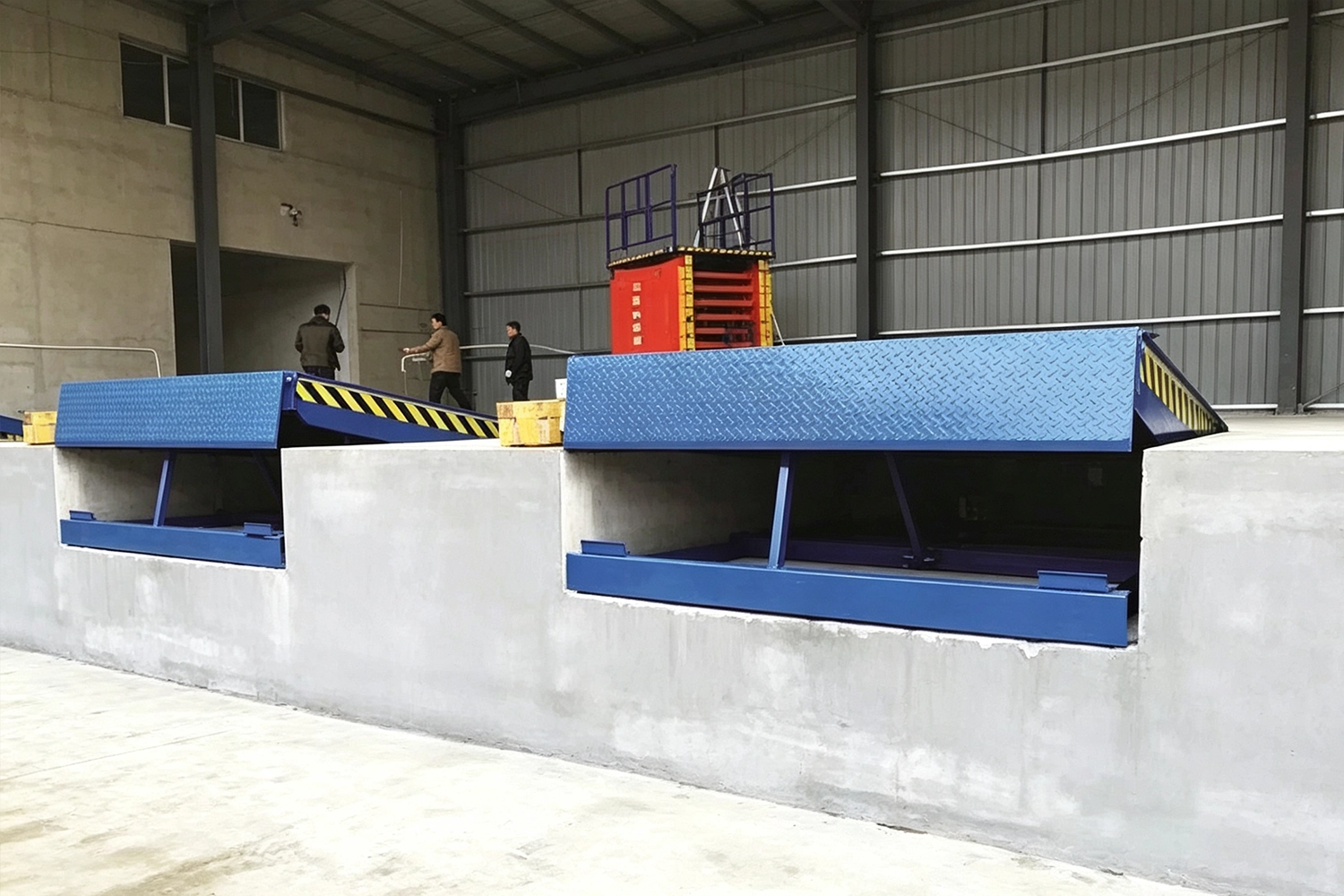
Hydraulic dock levelers are engineered specifically to solve the problem of trailer float. Once deployed, the hydraulic system allows the leveler platform to “float” up and down in tandem with the trailer bed. This ensures a continuous, flush connection throughout the entire loading process.
For heavy industrial applications, hydraulic systems are vastly superior to mechanical spring-loaded levelers. They offer higher weight capacities, smoother operation, and integrate critical safety features like velocity fuses, which instantly lock the platform if the truck departs prematurely.
Advanced Lip Design for Smooth Transitions
The most critical component bridging the gap is the dock leveler lip. Standard flat lips often create a sharp angle when resting on the trailer bed, causing a severe bump for forklifts. Advanced equipment, such as the ABX H-1000 series, utilizes a double 5-degree arch lip design.
This engineered arch ensures that the lip sits perfectly flat against the trailer floor, completely eliminating the transition bump. Furthermore, utilizing an enclosed tubular hinge design prevents the structural deformation that commonly plagues traditional piano-style hinges under heavy loads.
CONTACT ABX
Your Direct Source for Industrial Access Solutions
We offer 24/7 support. Feel free to leave us a message — we'll reply within 24 hours.