Integrating Dock Levelers with High-Speed Doors and AGV Systems
The evolution of the modern factory demands a fully interconnected loading dock system. For industrial architects and automation engineers, the goal is to achieve 100% unmanned operation at the facility’s entry and exit points. Traditional, manually operated loading bays act as severe bottlenecks in highly automated environments. To realize the vision of barrier-free passage for people and goods, procurement teams must specify dock equipment that seamlessly integrates with the broader factory automation ecosystem.
This integration requires synchronizing heavy-duty hydraulic dock levelers with high-speed industrial doors and Automated Guided Vehicle (AGV) networks. When these components operate in isolation, efficiency is lost, and the risk of collision increases. However, by utilizing advanced IoT control boxes and industrial-grade serial port connections, facility managers can tie the entire loading dock directly into the plant’s Distributed Control System (DCS) or Programmable Logic Controller (PLC) architecture. This allows for millisecond-level automated responses based on real-time logistical data.
This technical overview details the framework for creating an automated loading dock ecosystem. We will explore how radar and geomagnetic sensors trigger high-speed doors, and how the dock leveler communicates its status to approaching AGVs. By prioritizing equipment equipped with “professor-level” servo systems and robust IoT capabilities, large-scale logistics developers can future-proof their facilities. Understanding these integration protocols is essential for buyers looking to eliminate downtime and maximize the ROI of their automated material handling investments.
The Shift Toward Unmanned Loading Bays
In highly automated factories, the speed of material transfer is dictated by the slowest component. Manually opening a sectional door and deploying a dock leveler disrupts the continuous flow of AGVs. The industry is rapidly shifting toward unmanned loading bays where equipment reacts autonomously to approaching traffic.
This requires a fundamental upgrade in how dock equipment is controlled. Instead of manual push-button stations, modern docks utilize centralized control hubs that process inputs from various sensors and facility management software. This ensures that the bay is prepped and ready the moment a trailer is secured.
DCS/PLC Integration for Dock Equipment
To achieve true automation, the dock leveler and the high-speed door must communicate with the facility’s central brain—the DCS or PLC. Advanced dock systems are equipped with multiple industrial serial connection methods (such as RS485 or Modbus) to facilitate this data exchange.
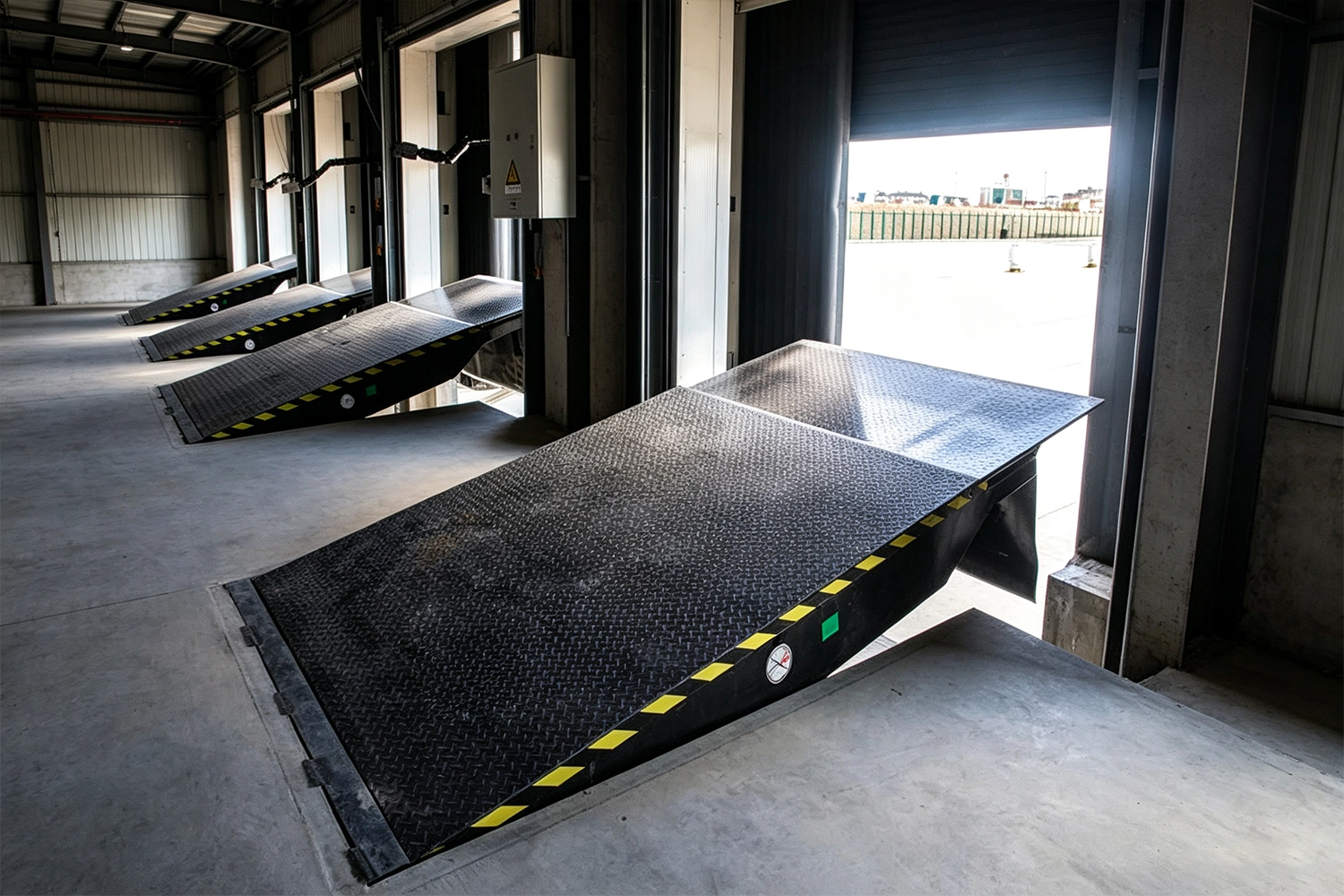
When a truck is locked into position by the vehicle restraint, the PLC receives a signal. It then automatically commands the high-speed door to open and the hydraulic dock leveler to deploy. The system also broadcasts a “ready” status to the AGV network, authorizing the automated forklifts to enter the trailer safely.
Synchronizing High-Speed Doors and Levelers
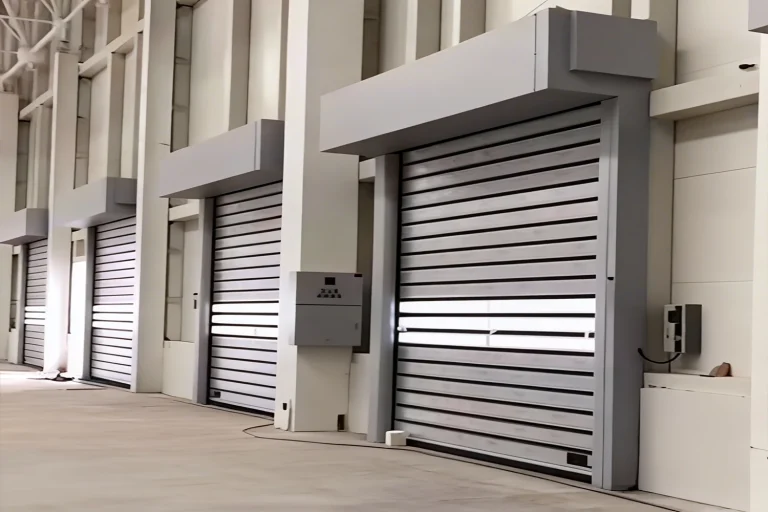
The physical coordination between the door and the leveler is critical to prevent equipment damage. A high-speed door, capable of opening at 2.5 m/s, must clear the path before the dock leveler lip extends. Intelligent control systems utilize interlocking logic to ensure these actions occur in the precise sequence.
Furthermore, these integrated systems are designed to accommodate the specific needs of AGVs. By utilizing radar or geomagnetic signals, the high-speed door can open milliseconds before the AGV arrives, ensuring zero deceleration. This seamless synchronization represents the ultimate standard in modern, barrier-free industrial logistics.
CONTACT ABX
Your Direct Source for Industrial Access Solutions
We offer 24/7 support. Feel free to leave us a message — we'll reply within 24 hours.